

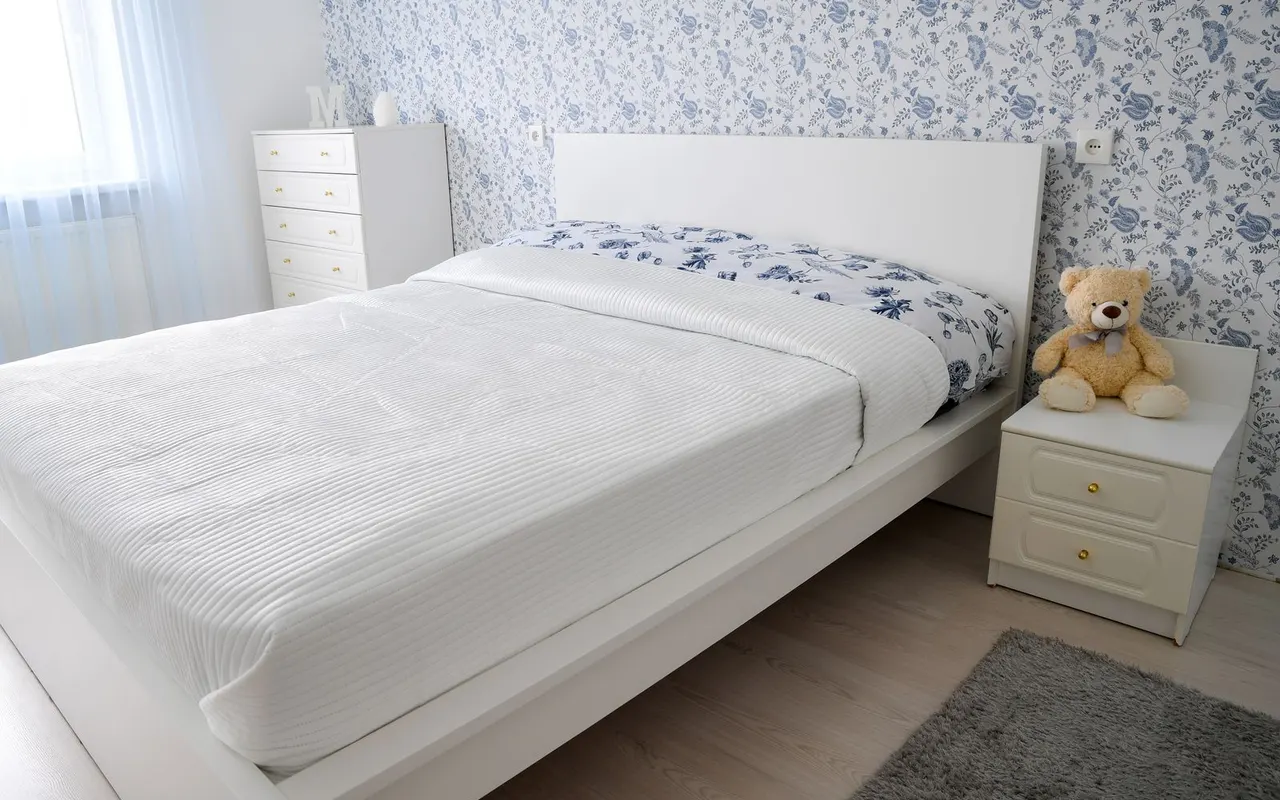
Ask which way your bed should face and you’ll get several different answers: north for deep sleep, east for growth, “never west”, “never north”. Most of that disagreement comes from mixing up different traditions and different meanings of “facing”. This guide sorts them out.
I’ll cover what “bed direction” actually means in feng shui, the two main approaches (personal directions from your Kua number and general directional associations), a reference table for all eight directions, and how to choose when your room, your partner or another tradition points somewhere else. If you’re more interested in which wall the bed should go against, that’s a separate question about layout, and I’ll point you to it below.
Key takeaways
- In feng shui, “bed direction” usually means the compass direction the top of your head points to while you sleep, which is the direction the headboard wall faces.
- The Eight Mansions school gives each person four favourable directions based on their Kua number. The Tian Yi (health) direction is often suggested for sleep.
- Popular guides also attach general meanings to each direction, such as east for growth and north for stillness. These vary from writer to writer.
- Layout comes first. A solid wall behind your head and a view of the door matter more, in nearly every school, than the compass point.
- Vastu Shastra, the Indian tradition, has its own sleeping-direction rules that differ from feng shui. Don’t mix the two.
What “bed direction” means
This is the source of most confusion. Some people mean the direction you face when you sit up in bed; others mean the direction your head points. In most feng shui teaching, the reference is the direction the top of your head points while you’re lying down. If your headboard is on the north wall, your head points north.
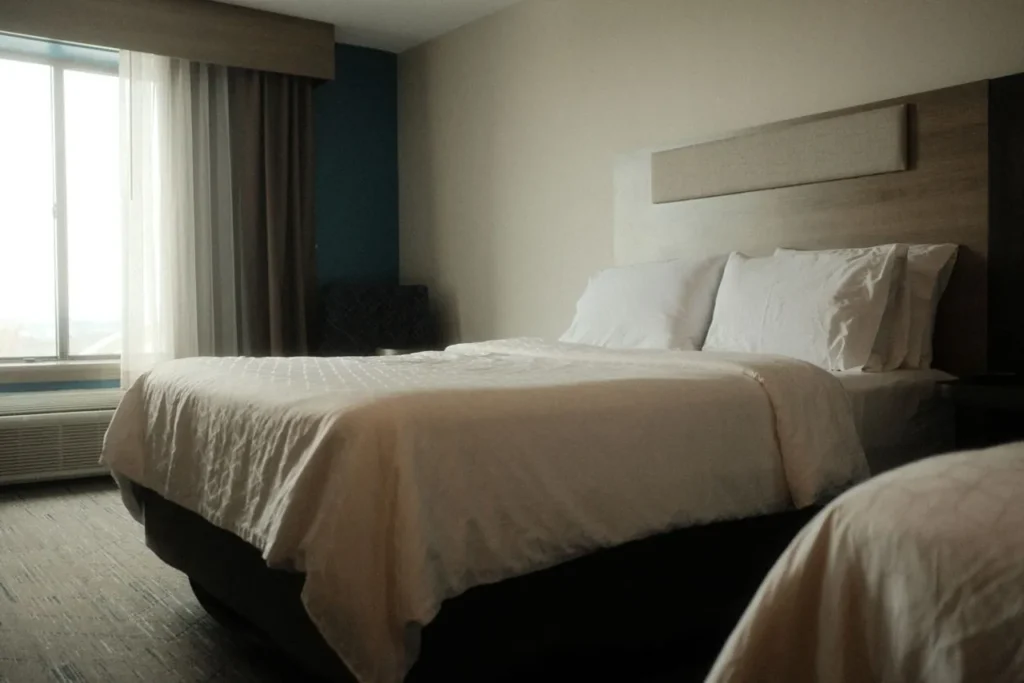
To find it, stand at the headboard facing the wall it’s against and take a compass reading in that direction. A phone compass is fine if you hold it flat, away from metal bed frames and electronics, and take two or three readings to be sure. Note the reading in degrees: feng shui divides the compass into eight sectors of 45 degrees, so north runs from 337.5 to 22.5 degrees, northeast from 22.5 to 67.5, and so on around the circle.
Layout before direction
Before you move a bed for its compass point, check the layout rules that nearly every school agrees on: the head of the bed against a solid wall, a view of the door from the pillow, and the bed out of the direct line of the door. If your favourable direction would mean sleeping under a window or with your feet pointing out of the doorway, most practitioners would tell you to keep the better layout and give up the direction. I go through those layout rules, and what to do when the room fights you, in my guide to where the head of your bed should go.
The reason layout wins is that it rests on the idea of the command position, which is shared across schools. Compass-based rules depend on which school you follow and, in the Eight Mansions approach, on who is sleeping in the bed.
Approach 1: your personal directions (Kua number)
The Eight Mansions (Ba Zhai) school assigns everyone a Kua number from their birth year and, in most versions, their sex. Each number belongs to the East group or the West group and comes with four favourable and four unfavourable directions. You can work out yours in a few seconds with the Kua number calculator.
The four favourable directions each have a traditional name and meaning:
- Sheng Chi: success and vitality. Often used for desks and front doors.
- Tian Yi: health. The direction most often suggested for sleeping.
- Yan Nian: relationships and harmony. Often suggested for couples.
- Fu Wei: personal stability and clarity. A calm, steady choice for sleep.
| Kua number | Group | Sheng Chi | Tian Yi (health) | Yan Nian | Fu Wei |
|---|---|---|---|---|---|
| 1 | East | Southeast | East | South | North |
| 2 | West | Northeast | West | Northwest | Southwest |
| 3 | East | South | North | Southeast | East |
| 4 | East | North | South | East | Southeast |
| 6 | West | West | Northeast | Southwest | Northwest |
| 7 | West | Northwest | Southwest | Northeast | West |
| 8 | West | Southwest | Northwest | West | Northeast |
| 9 | East | East | Southeast | North | South |
There is no Kua 5 in this system: it’s replaced by 2 for men and 8 for women in most traditions. East group people’s favourable directions are always north, south, east and southeast; West group people’s are always west, northwest, southwest and northeast.
Approach 2: general directional associations
Many popular guides skip the Kua number and give each direction a general meaning drawn from the bagua and the five elements. These are less precise, and you’ll see variations between writers, but they’re a reasonable starting point if you don’t want to work with personal numbers.
| Head points | Element | Common association | Often said to suit |
|---|---|---|---|
| North | Water | Stillness, deep rest | Light sleepers, people wanting calm; some find it too quiet |
| Northeast | Earth | Knowledge, reflection | Students, study-heavy periods |
| East | Wood | Growth, new starts | Young people, new jobs, fresh beginnings |
| Southeast | Wood | Abundance, steady growth | Building a business or savings |
| South | Fire | Recognition, passion | Some say too stimulating for sleep |
| Southwest | Earth | Relationships, stability | Couples |
| West | Metal | Contentment, creativity, children | Settled routines; some find it low-energy |
| Northwest | Metal | Leadership, helpful people, travel | People in responsible roles |
If you want to see how a direction’s element fits with your own, my guide to finding your feng shui element explains the birth-year method, and the five elements guide covers how the elements support and control each other.
Feng shui versus Vastu on sleeping direction
A lot of online advice about sleeping direction actually comes from Vastu Shastra, the Indian architectural tradition, rather than from feng shui. Vastu generally recommends sleeping with your head to the south or east and avoiding north. Feng shui has no blanket rule against north; in the general associations above, north is linked with calm and rest, and in the Kua system it’s favourable for the whole East group. If you follow Vastu, follow its rules; if you follow feng shui, use the approaches here. Mixing the two is where much of the conflicting advice comes from.
Choosing a direction for two people
Couples often find that one partner is East group and the other West group, so no direction suits both. Practitioners usually suggest one of these approaches:
- Use the layout as the tiebreaker. Pick the wall that gives a solid backing and a view of the door, and accept whatever direction that produces.
- Use a shared relationship direction. Some practitioners prefer southwest, linked with partnership in the bagua, as a neutral choice.
- Favour whoever needs it more. If one person sleeps badly or is unwell, use their Tian Yi direction.
- Use the main earner’s direction. This is the traditional answer in many older texts, though not everyone finds it appealing today.
When the direction can’t change
Many bedrooms only allow one sensible position for the bed. If yours points to an unfavourable direction, Eight Mansions practitioners sometimes suggest at least facing a favourable direction when you sit up in bed, or using a favourable direction for your desk instead. Others say to make the room as calm and well kept as possible and stop worrying about the compass. In a small room, the layout trade-offs are usually more important; my small bedroom feng shui plan ranks them.
Children’s and teenagers’ rooms
For children under about twelve, many practitioners don’t bother with Kua numbers at all and simply follow the general associations. East is the usual suggestion because of its link with growth and new beginnings, with northeast sometimes recommended for children who are studying hard. South is often avoided for young children because its fire association is considered too stimulating for sleep.
For teenagers, the Kua number becomes more commonly used, and the same rule applies as for adults: a solid wall and a view of the door first, then direction. It’s also worth remembering that a teenager’s sleep is shaped far more by screens, light and noise than by any compass point. If you’re putting effort into their room, a dark, quiet space with the phone charging elsewhere will do more than turning the bed.
Guest rooms and occasional sleepers
Because favourable directions are personal, there’s no “right” direction for a guest room. Most practitioners suggest using a neutral layout: solid wall, view of the door, nothing stored under the bed, and a calm colour scheme. If someone stays long term, you can adjust for them.
Common myths about sleeping direction
- “North is always bad.” That’s Vastu, as covered above. In feng shui, north is favourable for half of all Kua numbers.
- “Your feet should point to the door so luck can come in.” The opposite: the bed with feet straight out of the doorway is the “coffin position” that most schools avoid.
- “There’s one best direction for everyone.” Neither of the main feng shui approaches says this. One is personal; the other is about what you want from the room.
- “You need to change direction every year.” Annual “flying star” charts are a separate, advanced system. Some practitioners do adjust bedrooms yearly, but it isn’t part of the basic Kua approach.
- “Direction will fix poor sleep.” Feng shui is a traditional practice for arranging a home. If sleep is a persistent problem, it’s worth speaking to a doctor as well as rearranging the room.
A step-by-step way to decide
- List the walls where the bed could go with a solid wall behind it and no direct line to the door.
- Take a compass reading for each of those walls.
- If you use the Kua system, check which of them match your favourable directions, preferably Tian Yi or Fu Wei.
- If you don’t, check the general associations and pick what suits what you want from the room.
- If nothing lines up, choose the best layout and let the direction go.
Frequently asked questions
Which direction is best to sleep in feng shui?
There’s no single best direction. The Eight Mansions school uses your Kua number, with Tian Yi (health) often suggested for sleep. General guides often recommend north or east for rest.
Is it bad to sleep with your head facing west?
Not in feng shui generally. West is favourable for West group Kua numbers and is commonly linked with contentment and creativity. Some writers find it low-energy.
Is sleeping with your head to the north bad?
That rule comes from Vastu Shastra, not feng shui. In feng shui, north is linked with stillness and is favourable for East group Kua numbers.
Does bed direction mean where my head or my feet point?
In most feng shui teaching it means where the top of your head points while lying down, which is the direction of the headboard wall.
What if my partner and I have different favourable directions?
Choose the best layout first, then consider a shared relationship direction such as southwest, or use the direction of whoever is sleeping worse.
How do I find my bed’s direction?
Stand at the headboard facing the wall and take a compass reading, holding the phone flat and away from metal. Note the degrees and match them to the eight 45-degree sectors.