

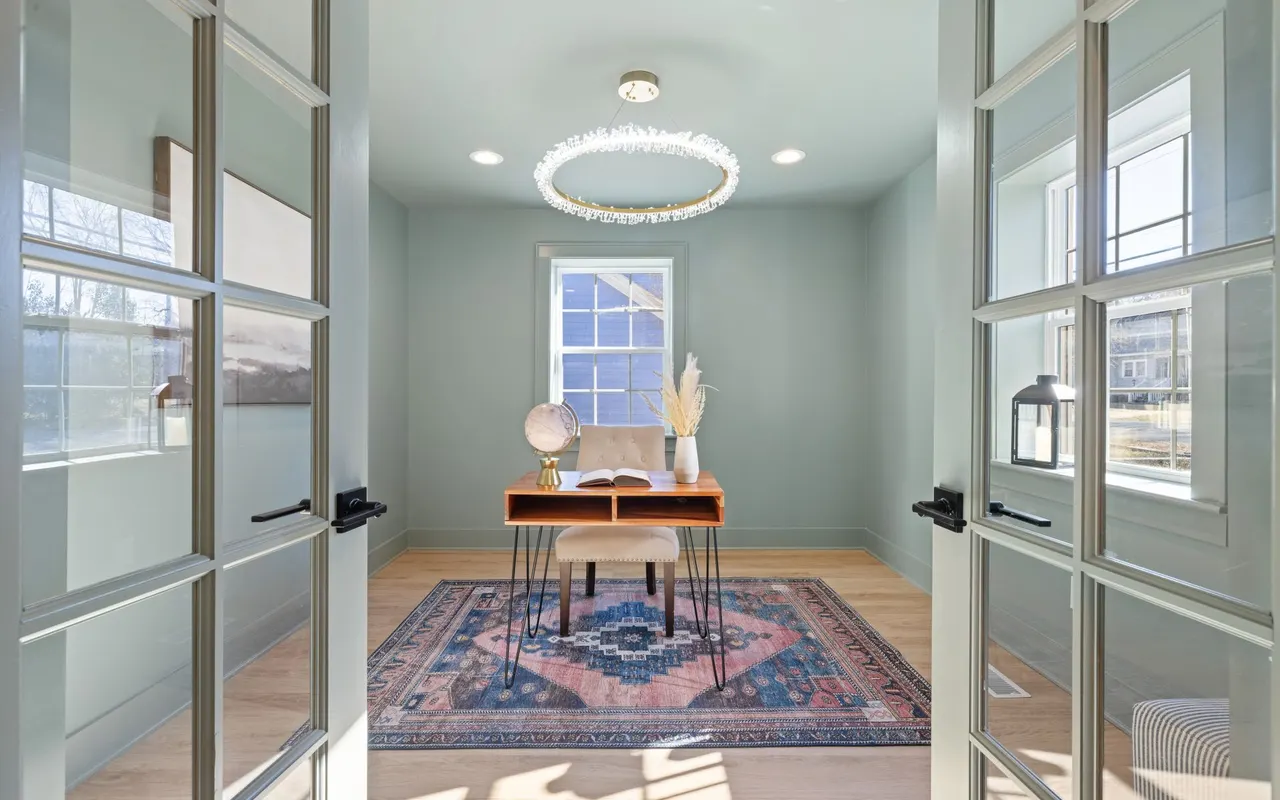
If you only learn one feng shui principle, the command position is a good one to choose. It’s practical, it applies to the three most important pieces of furniture in a home, and it’s one of the few ideas shared by almost every school of feng shui. It also makes intuitive sense to most people the first time they try it.
This guide explains what the command position is, where the idea comes from, and how to apply it to the bed, the desk and the stove, the three “power positions” of the home. I’ll also cover the sofa, what to do when a room makes the ideal impossible, and the most common mistakes.
Key takeaways
- The command position places you so that you can see the door without being directly in line with it, with a solid wall behind you.
- It’s applied most to the bed, the desk and the stove, and often to the main sofa.
- The usual ideal is diagonally across the room from the door.
- When the ideal is impossible, a mirror that shows the door, a solid headboard or chair back, and a buffer between you and the door are the standard workarounds.
- The principle rests on a simple feeling: people relax more when they can see who’s coming and have support behind them.
What the command position is
The command position (sometimes called the power position) has three parts:
- You can see the door from where you sit or lie, without turning your head far.
- You’re not directly in line with the door. Sitting or sleeping in the straight path from the doorway is considered exposed: energy, people and draughts come straight at you.
- You have support behind you, ideally a solid wall rather than a window or open space.
In most rooms that combination points to the area diagonally opposite the door. If the door is in the left corner of one wall, the command position is usually towards the right side of the opposite wall, and vice versa.
Where the idea comes from
The command position comes from classical landscape feng shui, which describes the ideal site for a home as protected on four sides by symbolic animals: a black tortoise (a hill or mountain) behind, a red phoenix (open, lower ground) in front, a green dragon to the left and a white tiger to the right. The tortoise gives support; the phoenix gives a view of what’s approaching. The command position applies that same arrangement to a single piece of furniture in a room.
There’s an ordinary explanation too, which you don’t need any theory to accept. People generally feel more at ease when nothing can approach from behind or out of sight. Restaurants put the best tables against walls with a view of the room for a reason. The command position is a formalised version of that instinct, and it’s one of the foundations of feng shui I describe in my guide to the basic principles of feng shui.
The bed
The bed is the most important of the three, because you spend so long there and you’re at your most vulnerable while asleep. The command position for a bed means:
- The head of the bed against a solid wall.
- A clear view of the door from the pillow.
- Not lying with your feet pointing straight out of the door, the so-called “coffin position”.
- Ideally, the bed diagonally across from the door.
The full set of bed placement rules, including what should and shouldn’t be behind and above the headboard, is in my guide to where the head of your bed should go.
The desk
For the desk, the command position means sitting so that you face into the room with the door in view, with a wall rather than a window or doorway behind you. Facing a wall with your back to the door is the classic mistake: it’s common in home offices because it’s the easiest way to fit a desk, but it leaves you facing a blank surface with your back exposed. People who work like that often say they feel jumpy when someone walks in.
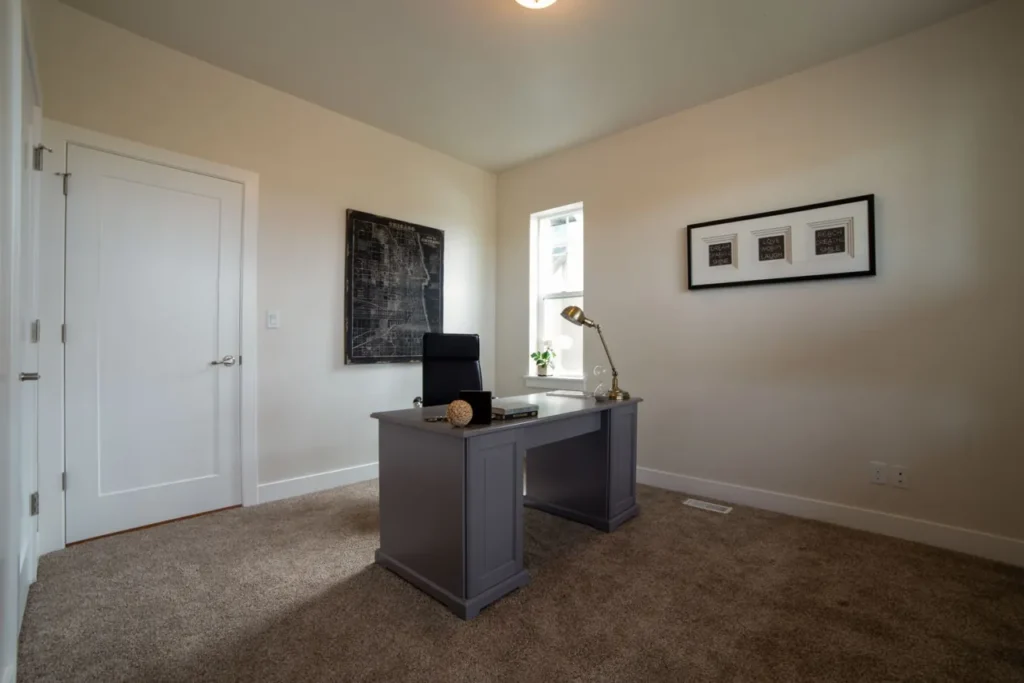
I go into desk direction, including compass directions and options for small rooms, in my guide on which way your desk should face. For a range of views from practitioners, see my roundup of home office advice from consultants.
The stove
The stove is the third power position. Classical feng shui links it with the household’s nourishment and prosperity, and the cook’s state of mind is said to go into the food. The ideal is that the cook can see the kitchen door while cooking. Because most hobs are fixed against a wall, this is often impossible, so a reflective splashback or a small mirror that shows the door behind is a common traditional fix. My guide to kitchen layout covers stove placement and the sink relationship.
The sofa
Many practitioners extend the command position to the main sofa in the living room: placed against a wall, with a view of the room’s entrance, rather than floating with its back to the door. If the sofa has to float in an open-plan room, a console table or a low bookcase behind it gives the “support” the wall would.
A quick reference table
| Furniture | Ideal command position | Most common problem | Standard fix |
|---|---|---|---|
| Bed | Head against solid wall, diagonal from door, door visible | Feet in line with the door | Move to another wall, or add a bench or chest at the foot |
| Desk | Facing into the room, door in view, wall behind | Facing a wall with back to the door | Turn the desk, or add a mirror that shows the door |
| Stove | Cook can see the kitchen door | Hob against a wall, back to the door | Reflective splashback or small mirror |
| Sofa | Against a wall, view of the entrance | Back to the door | Console table or bookcase behind it |
When the room won’t allow it
Very few rooms make the command position easy. Doors in awkward places, windows on the only free wall, radiators and built-in wardrobes all get in the way. Practitioners have a standard set of workarounds:
- Can’t see the door? Place a mirror so the doorway is visible from your bed or chair. In the bedroom, make sure it shows the door, not the bed; my bedroom mirror guide covers where it can go.
- No solid wall behind you? Use a solid headboard for a bed or a high-backed chair for a desk. A bookcase or screen behind a floating desk also works.
- In line with the door? Create a buffer: a bench or chest at the foot of the bed, a plant or rug between the desk and the door, and keep the door closed when you can.
- Window behind you? Heavy curtains or blinds that close fully give some support at night.
In small bedrooms the trade-offs get tight. My small bedroom feng shui plan ranks which rule to keep when you can’t have them all.
Common mistakes
- Confusing “seeing the door” with “facing the door”. You want the door in view, not to sit or lie directly in its path.
- Using a window as the “wall” behind you. A window is open space in feng shui terms. A solid wall is the support.
- Ignoring the second door. In rooms with an en-suite or a second entrance, the main door is the one to see. Keep the other one closed when you can.
- Prioritising compass direction over command position. Most practitioners agree that position comes first.
- Forgetting comfort. A bed in the command position next to a radiator or under a draughty window isn’t a good result.
Trying it for yourself
A simple way to test the principle: for a week, work at a desk facing a wall with your back to the door, then for a week with the desk turned so you face the room. Or simply sit in each spot for a few minutes and notice how you feel. Many people find the difference obvious immediately. If you don’t, that’s useful too; feng shui is a guide for arranging a space, and your own experience of a room counts.
Frequently asked questions
What is the command position in feng shui?
A placement where you can see the door without being directly in line with it, with a solid wall behind you. It’s applied mainly to the bed, desk and stove.
Is the command position the same as facing the door?
No. You should be able to see the door, but not sit or lie directly in line with it.
What if my bed can’t be in the command position?
Use a mirror to show the door, a solid headboard for support, and a bench or chest at the foot of the bed if you’re in line with the door.
Does the command position apply to the sofa?
Many practitioners apply it to the main sofa: against a wall, with a view of the entrance.
Why is the stove a power position?
Classical feng shui links the stove with the household’s nourishment and wealth, and suggests the cook should be relaxed and able to see who enters.
Is the command position more important than direction?
Most schools treat it as more important than compass direction, because it’s shared across traditions.