

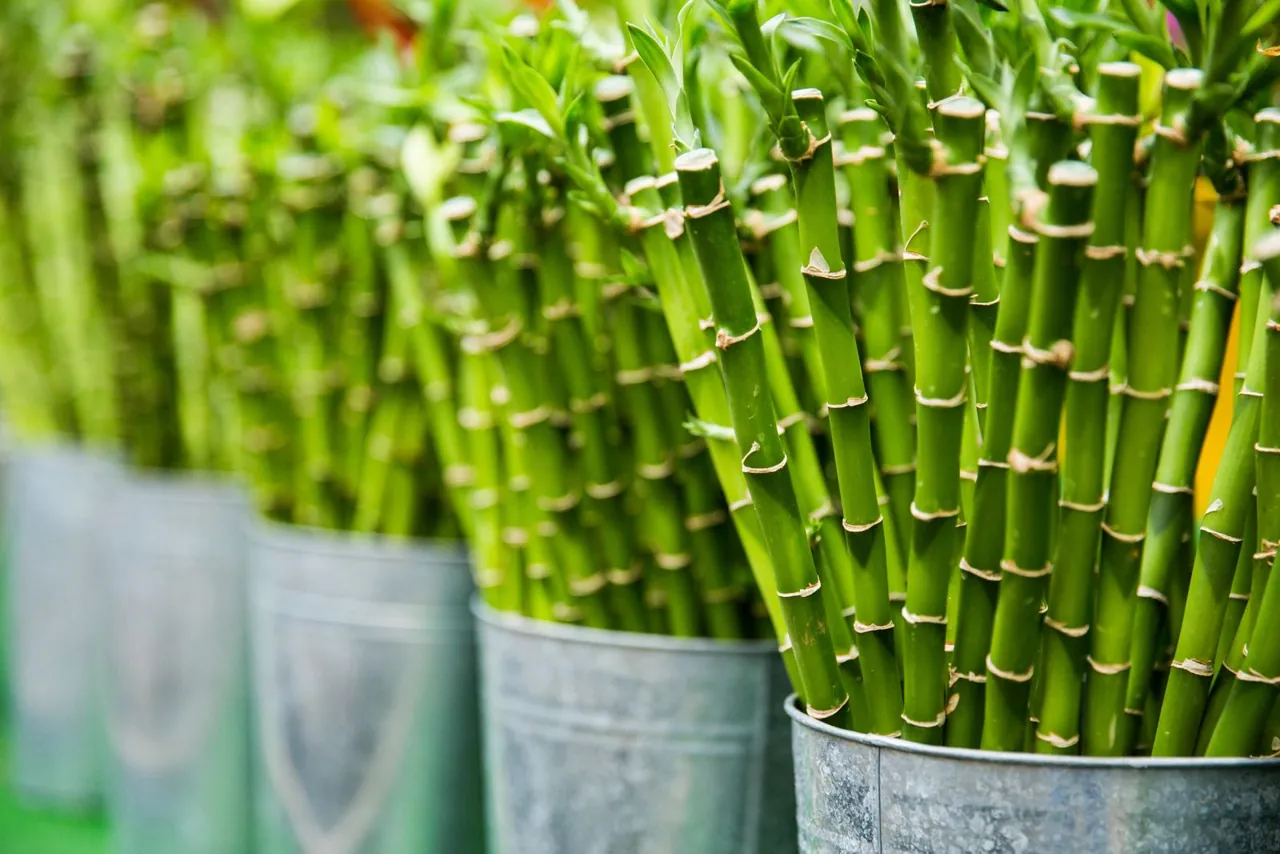
Lucky bamboo is one of the most popular feng shui gifts, especially for new homes, new businesses and Lunar New Year. Despite the name, it isn’t a bamboo at all. It’s Dracaena sanderiana, a tropical plant whose stalks happen to look like bamboo canes, and it grows happily in water or soil. In feng shui it’s valued for two things: it represents the wood element and steady growth, and the number of stalks in an arrangement carries its own meaning.
Here’s where to place lucky bamboo, what the stalk counts mean, and how to keep it healthy so it looks the part.
Key takeaways
- Lucky bamboo is a wood-element plant, linked with growth, resilience and good fortune.
- The best places are the east (family and health), the wealth area (far left from the door, or the southeast), a desk or home office, and near the entrance.
- Stalk numbers have meanings: two for love, three for happiness, wealth and long life, and so on. Four is traditionally avoided.
- It needs bright, indirect light and clean water changed regularly; direct sun scorches it.
- It’s toxic to cats and dogs if chewed, so keep it out of reach of pets.
Why lucky bamboo is lucky
Bamboo is a long-standing symbol of strength and flexibility in Chinese culture: it bends in the wind without breaking. Lucky bamboo borrows that symbolism. In feng shui terms it also brings together several elements in a single arrangement: the plant itself is wood, the water it grows in is water, the stones that hold it are earth, and a red ribbon tied around the stalks adds fire. A glass or metal container can complete the set, which is one reason it’s seen as such a balanced cure.
Where to place lucky bamboo
| Location | Feng shui reasoning | Practical note |
|---|---|---|
| East | The wood area of family and health | A living room or kitchen on the east side suits it |
| Wealth area | Wood supports growth; the southeast in compass feng shui, or the far left corner from the door | Combine with a clean, uncluttered corner |
| Desk or home office | Growth and steady progress at work | The far left corner of the desk is the desk’s own wealth area |
| Near the entrance | Welcomes good energy into the home | Keep it out of cold draughts from the door |
| Shop counter or reception | A traditional business gift for prosperity | Needs bright, indirect light, not a dark corner |
For the wealth area in particular, my guide to what to put in your wealth corner shows how plants work with the other traditional elements there.
Where to avoid it
- Direct sun, which yellows and burns the leaves.
- The bathroom, if it’s dark. The humidity suits it, but low light doesn’t.
- Next to the stove or radiator, where heat dries it out. Wood near the stove is fine in element terms, but the plant suffers.
- The bedroom, in stricter schools that keep active wood energy out of a room for rest. Many people keep a small arrangement there without a problem.
- Anywhere pets can reach it.
What the number of stalks means
The meanings below are the ones most commonly given by sellers and feng shui writers. They vary a little from source to source, and many are based on how the numbers sound in Chinese.
| Stalks | Common meaning |
|---|---|
| 2 | Love and partnership; a popular wedding or anniversary gift |
| 3 | Happiness, wealth and long life; the most popular arrangement |
| 5 | The five elements, or areas of life such as health and wealth |
| 6 | Luck and prosperity; six sounds like “smooth” or “flowing” |
| 7 | Health |
| 8 | Wealth and growth; eight sounds like “prosperity” |
| 9 | Great good fortune |
| 10 | Completeness |
| 21 | A powerful blessing, often for a business |
Four stalks are traditionally avoided because the word for four sounds like the word for death in Chinese. Arrangements of four are rarely sold for that reason. If you’re giving lucky bamboo as a gift, three or eight are safe, cheerful choices.
Spirals, towers and braids
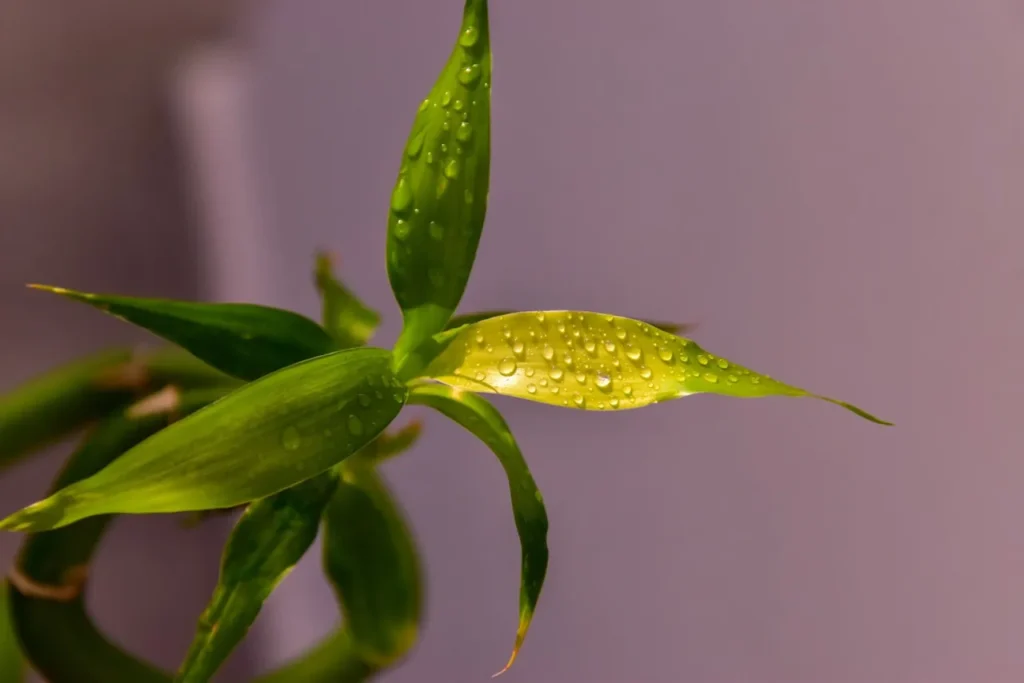
Lucky bamboo is often trained into spirals, woven into lattices or arranged in tiers. The shapes are mostly decorative, though tiered “towers” are usually sold with a stalk count in mind, and spirals are sometimes said to represent energy moving upward. Choose an arrangement you like the look of; in feng shui, a healthy plant that you enjoy matters more than its shape.
Keeping lucky bamboo healthy
- Light: bright, indirect light. It tolerates lower light but grows more slowly.
- Water: keep the roots covered and change the water every week or two. If your tap water is hard or heavily treated, filtered water or rainwater helps prevent yellow tips.
- Container: rinse the vase and stones when you change the water to stop algae.
- Feeding: a very dilute houseplant fertiliser every month or two is plenty.
- Trimming: cut back long side shoots; the cuttings can be rooted to start a new arrangement.
- Yellow stalks: remove a stalk that turns yellow, since it won’t recover and can affect the others. You may want to replace it to keep the number you chose.
Giving lucky bamboo as a gift
Lucky bamboo is one of the safest feng shui gifts because it suits almost any home or office. A few customs make it more thoughtful: choose a stalk count that fits the occasion (two for a couple, three for a housewarming, eight or 21 for a new business), make sure the stalks are firm and green with no yellowing, and add a red ribbon if the arrangement doesn’t already have one. Include a short note on care, since the most common reason a gift plant fails is that nobody changed the water.
Lucky bamboo and other feng shui plants
Lucky bamboo is one of the easiest ways to add the wood element, but it isn’t the only one. The money tree, the jade plant, the snake plant and pothos all have feng shui reputations of their own, and my guide to the best feng shui plants by room shows where each suits best. If prosperity is your main aim, see also where to put a money tree. For how wood fits with the other elements in a room, my guide to the five elements explains the cycles.
Frequently asked questions
Where is the best place to put lucky bamboo?
The east or the wealth area of your home, a desk, or near the entrance, in bright, indirect light.
How many lucky bamboo stalks are best?
Three (happiness, wealth and long life) and eight (prosperity) are the most popular. Avoid four.
Can lucky bamboo go in the bedroom?
Some practitioners prefer to keep plants out of the bedroom; many are comfortable with a small arrangement away from the bed.
Is lucky bamboo real bamboo?
No. It’s Dracaena sanderiana, a tropical plant that resembles bamboo.
Why is my lucky bamboo turning yellow?
Usually too much direct sun, chemicals in tap water, or water that hasn’t been changed. Move it to softer light and use filtered water.
Is it bad luck to buy lucky bamboo for yourself?
Some people say it’s luckier as a gift, but buying your own is entirely normal.