

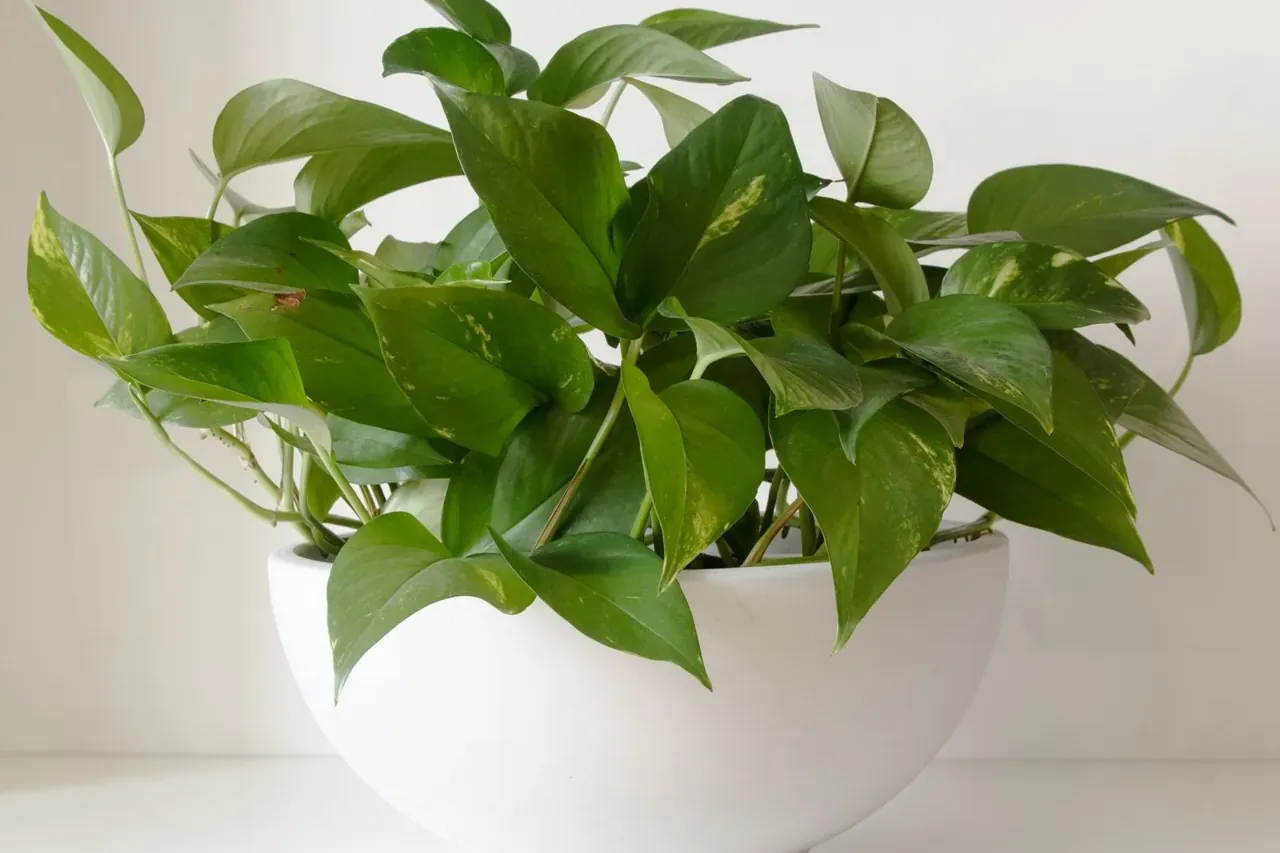
Golden pothos (Epipremnum aureum) is one of the most common houseplants in the world: easy to grow, tolerant of low light and happy trailing from a shelf for years. It’s also one of the plants people most often ask about in feng shui, usually because they’ve read somewhere that it’s unlucky, or alternatively that it’s a “money plant”. Both claims come up, and they can’t both be right.
The short answer is that golden pothos is generally considered good feng shui, provided it’s healthy and in the right place. Here’s why, where it works best, and the few situations where it’s better avoided.
Key takeaways
- Golden pothos is not bad feng shui. Its rounded, heart-shaped leaves and vigorous growth are linked with wood energy, growth and abundance.
- In parts of South and Southeast Asia it’s widely called a “money plant”, which adds to its reputation as a prosperity plant.
- Good places are the wealth area, the east (family and health), living rooms, kitchens and home offices.
- Trim long, straggly vines and remove yellow leaves; a neglected pothos is the only kind feng shui frowns on.
- It’s toxic to cats and dogs if chewed, so keep it out of reach of pets.
Why people ask whether pothos is bad feng shui
Most of the worry seems to come from two ideas. One is that trailing or vining plants “drag energy down”. The other is a general rule some writers apply to any plant that climbs or clings. Neither is a classical feng shui principle. Traditional guidance on plants focuses on whether a plant is healthy, whether its leaves are soft or sharp, and whether it suits the space.
On all three, pothos does well. Its leaves are soft and rounded, it grows readily, and it adapts to most rooms. The real feng shui problem is a pothos that’s been left to decline: long bare vines, yellowing leaves, dust and a pot sitting in water.
What golden pothos represents
Plants in general belong to the wood element, which stands for growth, vitality and new beginnings. Pothos adds a few qualities of its own:
- Rounded leaves: soft shapes are preferred to sharp ones, especially in rooms for rest and conversation.
- Vigorous growth: feng shui reads steady, healthy growth as a good image for prosperity and progress.
- Gold variegation: the yellow streaks of golden pothos are sometimes linked with gold and wealth.
- The “money plant” name: in India and much of Southeast Asia, pothos is commonly called the money plant and kept for prosperity. It’s a different plant from the braided Pachira sold as a money tree, and from the Chinese money plant (Pilea).
If you’d like to compare it with the braided money tree, my guide on where to put a money tree explains how the two are used.
Where to put golden pothos
| Location | Why it suits pothos | Tip |
|---|---|---|
| Wealth area (far left from the door, or southeast) | Wood energy supports growth | Keep it lush; replace it if it struggles |
| East (family and health) | Another wood area | A living room on the east side is ideal |
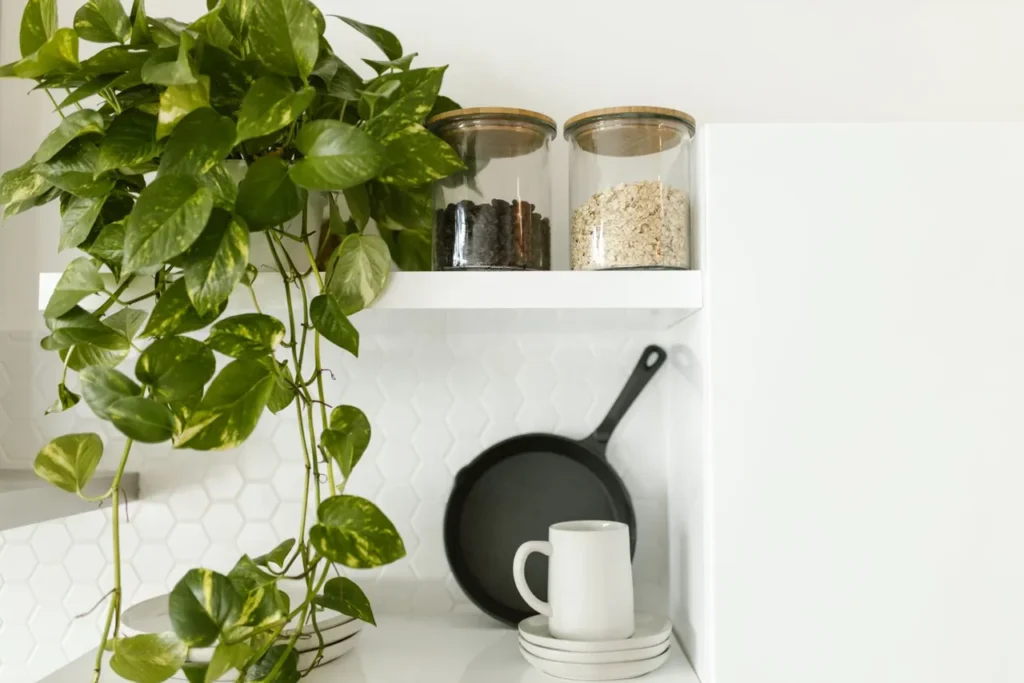
| Living room | Softens hard lines and corners | Let it trail from a shelf to soften a sharp corner |
| Kitchen | Wood sits between water (sink) and fire (stove) in the element cycle | Keep it away from the hob’s heat |
| Home office | Brings life to a metal-heavy space of screens and equipment | A small pot on a shelf rather than trailing over the desk |
| Bathroom | Copes with humidity and low light | A plant is a traditional way to balance the room’s water |
For the wealth area specifically, my guide to what to put in your wealth corner shows how plants combine with the other traditional elements.
Where to avoid it
- Within reach of pets or small children. Pothos contains calcium oxalate crystals that irritate the mouth and stomach if chewed.
- Trailing across doorways or paths, where vines catch on people and block the flow through a room.
- The bedroom, if you follow the stricter view that plants are too active for a room of rest. Many practitioners allow one or two healthy plants there, so this is a matter of school.
- Dark corners where it can’t thrive. Pothos tolerates low light but grows thin and leggy in very dark spots.
Ways to display pothos
How you grow pothos changes how it reads in a room. Trailing from a high shelf or a hanging pot, it softens hard lines and fills the space above head height without crowding the floor. Trained up a moss pole, it grows larger leaves and gives a strong vertical, which some people prefer in a corner. In a glass jar of water, a few cuttings make a light, simple arrangement for a desk or a kitchen windowsill, and they bring water and wood together in one small display. Whichever you choose, keep vines tidy: a few well-placed trails look intentional, while a tangle across a window or a doorway starts to feel like clutter.
Pothos also works well grouped with other plants. A cluster of two or three plants of different heights in one corner usually looks better, and is easier to care for, than single pots dotted around the room.
Keeping it healthy
A healthy plant matters more in feng shui than the species. Pothos is easy, but a few habits help:
- Bright, indirect light is best; it will survive in lower light but with smaller, plainer leaves.
- Water when the top few centimetres of soil are dry, and never leave the pot standing in water.
- Pinch back long vines to keep it bushy; the cuttings root easily in water.
- Wipe the leaves now and then so they stay glossy and dust-free.
- Remove yellow or brown leaves promptly.
Pothos compared with other popular plants
Pothos is one of several easy plants with a good feng shui reputation. The snake plant has upright, pointed leaves that suit entrances and corners; my guide to whether a snake plant is good feng shui covers it. For a room-by-room view of which plants suit which spaces, see the best feng shui plants by room.
Frequently asked questions
Is golden pothos lucky?
It’s generally considered a positive plant in feng shui, linked with growth and, through its “money plant” name, with prosperity.
Can I keep pothos in the bedroom?
Many practitioners allow one or two healthy plants in a bedroom. Keep it away from the bed and out of reach of pets.
Is it bad if my pothos is dying?
A struggling plant is the one situation feng shui treats as negative. Trim it back, move it to better light, or replace it.
Is pothos the same as the money tree?
No. Pothos is a trailing vine sometimes called a money plant; the money tree is the braided Pachira aquatica. Both are used for prosperity in feng shui.
Does pothos clean the air?
It was included in well-known laboratory studies of plants and air quality, but those used sealed chambers. In a normal home, ventilation makes far more difference than a few plants, so choose pothos for its looks and easy care rather than as an air purifier.