

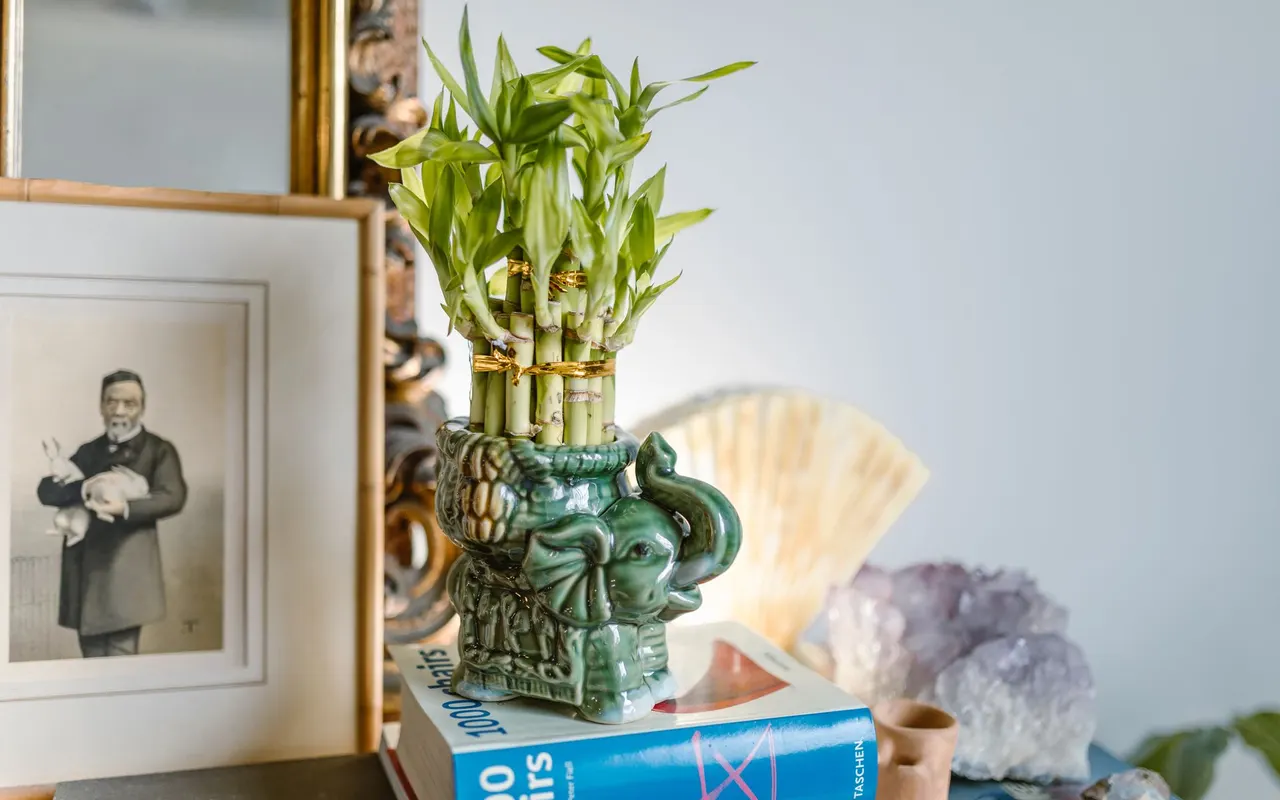
Elephants turn up in feng shui shops everywhere: carved wood, brass, jade-coloured ceramic, often in pairs, usually with their trunks raised. They’re one of the gentler symbols in the tradition, associated with strength, wisdom, loyalty and protection rather than with a quick change of luck. Where you put one depends on what you’d like it to stand for.
Key takeaways
- In Chinese tradition the elephant (象, xiàng) sounds like the word for “auspicious” (祥, xiáng), which is part of why it’s considered lucky.
- A pair of elephants facing the entrance from inside is the classic placement for protection and good fortune coming in.
- Trunk up is linked to celebration and luck; trunk down to steadiness, storing good energy and fertility. Both are traditional.
- The northwest (helpful people) and the bedroom (a pair, for partnership) are other common spots.
- Elephants are respected in many cultures. If your figure is Ganesha, it comes from Hindu tradition and has its own customs.
Why elephants are considered lucky
Part of the reason is linguistic. Chinese symbolism often works through sound-alike words, and xiàng (elephant) sounds very close to xiáng (auspicious, good omen). An old phrase, 太平有象 (tàipíng yǒu xiàng), plays on this: an elephant carrying a vase is read as “peace has its signs”, and the image appears on ceramics and carvings as a wish for peaceful, prosperous times.
The rest is the animal itself. Elephants are large, calm, long-lived and protective of their families, so they’ve come to represent strength, wisdom, longevity and loyalty. In feng shui shops they’re sold for protection, for steady support at work and for family harmony.
Trunk up or trunk down?
This is the question most people ask. Popular feng shui writing usually reads the two poses like this:
| Pose | Traditional meaning | Typical use |
|---|---|---|
| Trunk up | Celebration, good luck, success; “trumpeting” good fortune into the home | Entrance, living room, office |
| Trunk down | Steadiness, storing and conserving good energy; also linked to fertility and long life | Bedroom, family areas, a quieter corner |
You’ll find writers who insist trunk-down elephants are unlucky. Others say the opposite. There’s no single classical rule, so choose the pose whose meaning suits the spot.
Where to place elephants
Facing the front door, from inside
The most common placement is a pair of elephants just inside the entrance, facing the door, as though welcoming luck in and guarding the threshold. A pair on a console table or either side of the doorway works well. This is the same logic used for foo dogs, which are placed outside the door facing out.
The northwest: helpful people and mentors
In the compass bagua, the northwest is the area of helpful people, travel and the head of the household. Elephants, as symbols of support and wisdom, are often placed here, sometimes with an elephant carrying a rider or a vase. My guide to what to put in the northwest explains why metal elephants in particular suit this area. If you use the door-based map, the equivalent area is the near right corner as you enter. The bagua corner finder shows where that falls in your home.
The bedroom: a pair for partnership
Pairs of animals are a feng shui shorthand for partnership, and two elephants (or a mother with a calf, for those hoping for a family) are sometimes placed in the bedroom. Many people choose trunk-down figures here, in keeping with the calmer mood a bedroom calls for.
The home office or desk
A single elephant on a desk or shelf is meant to stand for steady, patient progress. Place it where you can see it from your chair, ideally on the side away from the door.
A child’s room or study area
The northeast is linked to knowledge and learning. A small elephant there, or on a child’s desk, is a traditional wish for wisdom.
Choosing materials and size
- Wood suits the east, southeast and family areas (wood element).
- Metal and brass suit the west and northwest (metal element), which is why brass elephants are popular for the helpful-people area.
- Ceramic and stone belong to earth and suit the centre, northeast and southwest.
- Choose a size that fits the space. A small, well-placed figure is more in keeping with feng shui than an oversized one crowding a shelf.
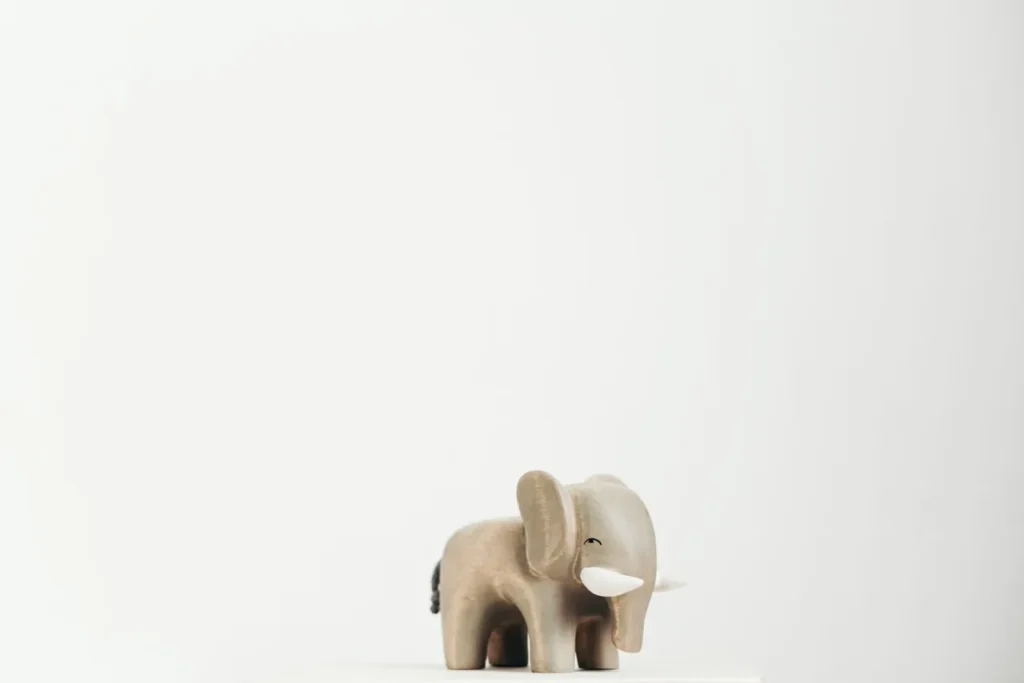
Elephant pictures, prints and textiles
Figurines are the classic form, but elephants also appear in paintings, prints, cushions and rugs. The same placement ideas apply, with a couple of extra points:
- Direction in pictures. An elephant in a painting walking into the room, or towards the centre of the home, is preferred to one walking out of the frame towards the door.
- Herds and families. A picture of a herd, or of a mother and calf, is often chosen for family areas and the east (family) sector.
- Mood. Calm, peaceful images suit bedrooms and living rooms; images of charging or fighting elephants are usually kept out of the home.
- Textiles. Elephant-patterned cushions or throws are a gentle way to bring the symbol into a bedroom without a figure watching the bed.
Combining elephants with other symbols
Elephants are often shown with other auspicious items, and each combination carries its own reading. An elephant carrying a vase is the “peace has its signs” image described above. An elephant with a rider is linked with being supported in a position of responsibility. Elephants are sometimes paired with a wealth vase or coins on their saddle to combine strength with prosperity. If you have several symbolic objects and aren’t sure how to arrange them, my placement table for 15 common feng shui symbols shows where each traditionally goes, so they don’t end up crowded on one shelf.
Choosing an elephant responsibly
Traditional elephant carvings were sometimes made from ivory. Most countries now restrict or ban the trade in new ivory, and buying it contributes to poaching. Choose wood, brass, stone, ceramic or resin instead. If you’ve inherited an antique ivory piece, check the rules where you live before selling or moving it. Feng shui places great weight on the history and condition of objects in the home, and many practitioners would say a symbol connected to harm sits uneasily with the intention behind it.
Giving elephants as a gift
A pair of elephants is a common gift for a new home, a wedding or a new business. If you’re giving one, choose a pair with raised trunks for a home or business (the celebratory pose), or a mother and calf for a couple starting a family. Suggest placing them inside the front door facing in, which is the most widely recognised spot.
What to avoid
- Chipped or broken figures; tradition asks for symbols in good condition.
- Elephants facing out of the front door, which is read as luck walking out.
- Placing them on the floor of a bathroom or next to the bin.
- Crowding: one pair, or one figure, per area is plenty.
A note on Ganesha
Ganesha, the elephant-headed deity, belongs to Hindu tradition rather than feng shui. Ganesha figures are often placed near entrances or in a home shrine according to Hindu custom, and many families have specific practices around them. If you have a Ganesha murti, follow those customs rather than general feng shui placement tips.
Frequently asked questions
Should elephants face the door?
Inside the home, yes: facing the front door, as if greeting the energy coming in. Elephants facing out of the door are traditionally avoided.
Is a trunk-down elephant bad luck?
Not in most feng shui writing. It’s usually linked to steadiness and conserving good energy, and it’s often preferred for bedrooms.
How many elephants should I have?
A pair is the classic choice for entrances and bedrooms. A single elephant is fine on a desk or shelf.
Can I put an elephant in the wealth corner?
You can. Elephants aren’t a specifically “wealth” symbol, but a trunk-up elephant is sometimes added to the wealth corner alongside a plant.