

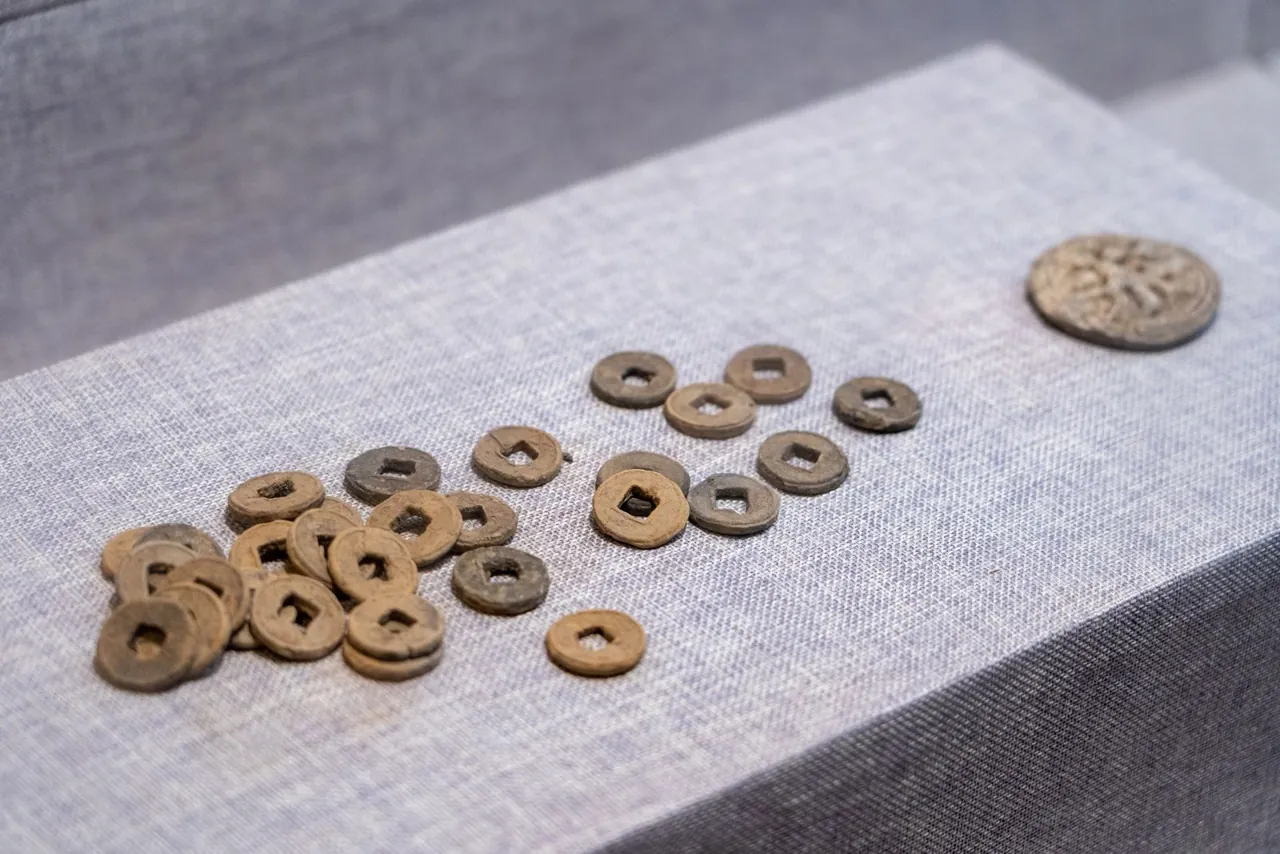
Chinese coins with a square hole in the middle are one of the most recognisable feng shui symbols. You’ll see them tied in threes with red ribbon, hung on tassels, sewn onto pouches or tucked into wallets. They’re simple objects, and the meaning behind them is straightforward once you know how the old coins were made and used.
Key takeaways
- The coins are modelled on traditional Chinese cash coins: round with a square hole, used for over two thousand years.
- The round outside is read as heaven and the square hole as earth, so the coin stands for heaven and earth in harmony.
- Three coins tied with red string is the classic wealth charm; red stands for luck and activates the symbol.
- Common spots are the wealth corner, the front door, the cash box or till, and your wallet.
- Coins are a symbol and a reminder, not a financial strategy.
Where the coins come from
Round coins with a square central hole were used in China from around the third century BCE until the early 20th century. The hole let them be strung together in strings of hundreds or thousands, which is why “a string of cash” was a common unit of value. Each coin usually carried four characters around the hole, often the reign title of the emperor of the time.
Because they were money, these coins naturally became symbols of wealth. Over time they were also made purely as charms, with auspicious phrases instead of reign titles. The feng shui coins sold today are reproductions, usually brass, often with the inscriptions of the prosperous Qing dynasty reigns.
What the shape means
Traditional Chinese cosmology described heaven as round and earth as square. A coin with a round edge and a square hole therefore carries both, and is read as heaven and earth coming together, a good omen for abundance. The side with four characters is usually called the yang side and the plain or two-character side the yin side. Many practitioners place coins yang side up.
How many coins, and why red?
| Number | Common reading | Typical use |
|---|---|---|
| 3 | Heaven, earth and humanity; the classic wealth charm | Wallet, front door, cash box |
| 6 | Linked to the metal element and the northwest (helpful people) | Hung in the northwest or near the door |
| 8 | A homophone for prosperity in Chinese | Wealth corner, business premises |
| 9 | Completion and long life | Hung in strings or tassels |
The coins are usually tied with red string or ribbon. Red is the colour of luck and celebration in Chinese culture, and in feng shui terms the red “activates” the coins.
Where to put feng shui coins
The wealth corner
Three or eight coins in a small bowl, or tied under a healthy plant, are a classic addition to the wealth area: the far left corner from your front door (Western bagua) or the southeast (compass bagua). See how to find your wealth corner, or use the Bagua Corner Finder.
The front door
Three coins tied with red ribbon can be hung on the inside handle of the front door, or placed under the doormat, as a symbol of wealth entering the home.
Wallet, purse or cash box
Keeping three tied coins in your wallet, or in the till of a shop, is one of the most popular uses. The idea is that money “attracts money”; in practical terms, it’s a small reminder to be mindful about spending.
A money jar
Coins are a natural ingredient for a wealth jar or bowl. My guide on how to make a feng shui money jar walks through it.
How to tie three coins
- Choose three coins of the same size and lay them yang side up, overlapping slightly in a row.
- Cut a length of red string or thin ribbon.
- Thread it up through the square hole of the first coin, across and down through the second, then up through the third, so the string binds them together.
- Tie the ends in a secure knot behind the coins and leave a loop if you’d like to hang them.
Ready-tied coins are widely available too, and work just as well. What matters is that they’re clean, intact and held together.
Choosing good coins
Most feng shui coins are brass reproductions. Heavier pieces with clear, crisp characters tend to be better made than very light ones with blurred inscriptions. You’ll often see sets marked as the “five emperors” coins, carrying the reign titles of five early Qing emperors whose reigns are remembered as stable and prosperous; they’re a popular choice for wealth charms. Genuine antique coins exist but are collectors’ items, and there’s no need to use them for feng shui.
Coins in a shop or business
Coins have an obvious place in business feng shui. Common uses are a set of three tied coins in the till or cash drawer, coins taped inside the order book or ledger, and a string of coins hung on the inside of the shop door. If you run a business from home, the same ideas apply to your desk drawer or the box where you keep invoices.
What to avoid
- Coins in the bathroom or near drains, which are associated with money flowing away.
- Dirty, damaged or loose coins scattered around. Keep them clean and tied together.
- Placing them on the floor where they’ll be stepped on (the doormat tradition is the one exception).
Frequently asked questions
Can I use modern coins?
Traditional feng shui uses Chinese-style coins with a square hole. Some people use local coins in a money bowl, but the heaven-and-earth symbolism comes from the old design.
Which side should face up?
Usually the yang side, with four characters. Practitioners differ, so don’t worry too much.
Can I give feng shui coins as a gift?
Yes. Three coins tied with red ribbon are a common small gift for a new job, a new business or Lunar New Year.
How often should I replace them?
There’s no fixed rule. Re-tie them with fresh red ribbon when the old one fades or frays.