

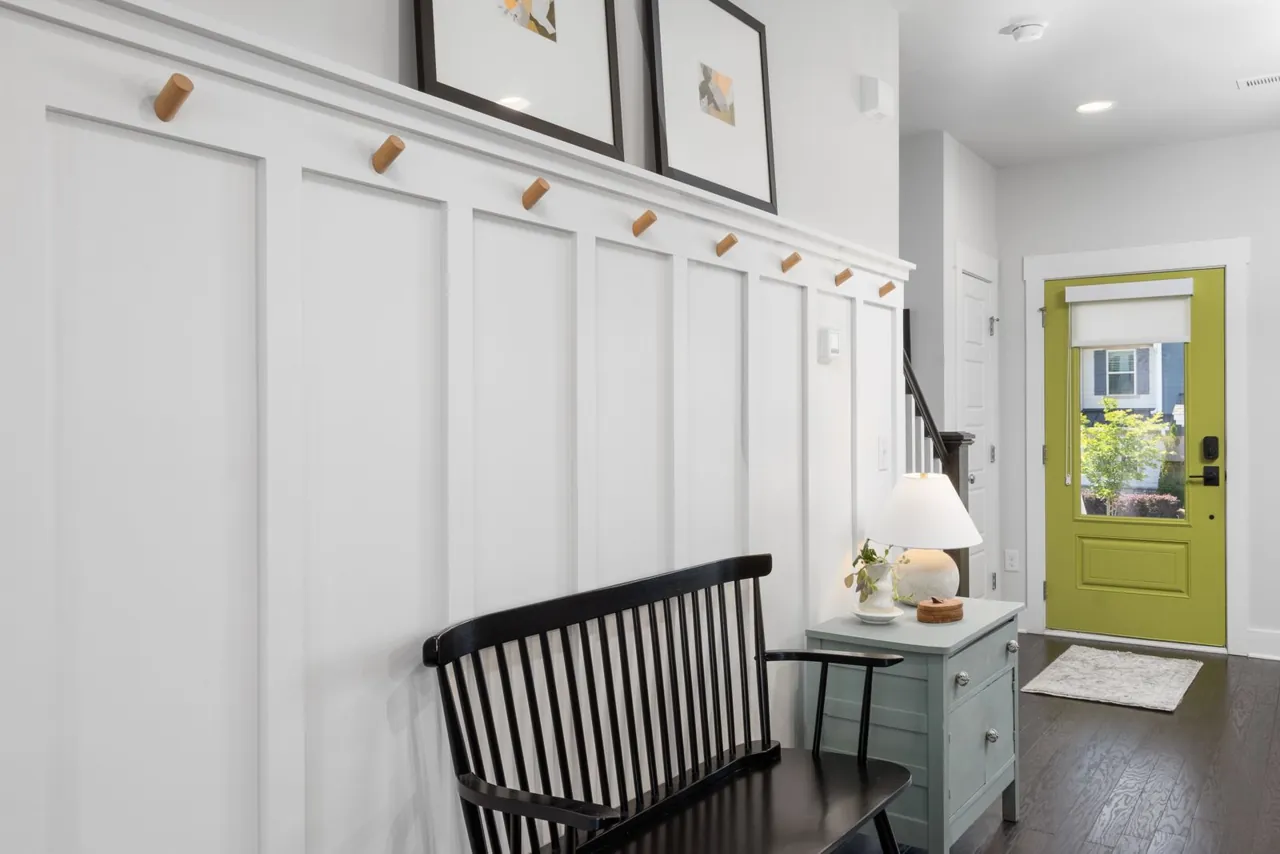
Feng shui calls the front door the “mouth of chi”: the main way energy, and people, enter your home. That’s why so much of the tradition’s attention goes to what the door faces and what you see the moment you step inside. Unfortunately, many homes weren’t designed with any of this in mind. The stairs drop straight down to the door, the back door lines up with the front, or you open the door onto a blank wall a metre away.
This guide works through the most common problem layouts one by one: what traditional feng shui says about each, how strongly the different schools feel about it, and the practical fixes that work in real homes, including rented flats where you can’t knock down walls. You’ll find a summary table near the end if you only want the short answers.
Key takeaways
- The core idea behind every front door rule is the same: energy should enter, slow down and circulate, rather than rush straight through or get stuck.
- Stairs facing the door, a back door in line with the front, and a wall right inside the door are the three layouts people ask about most.
- Most fixes are about softening a straight line: a rug, a plant, a piece of furniture or a change of lighting.
- Nothing here requires special objects. A tidy, well-lit entry with a clear path solves more than any cure.
- If a problem can’t be fixed, focus on what you can control: a welcoming threshold and a calm first view.
Why the first few metres matter
Traditional feng shui imagines chi moving like water or a gentle breeze. It should meander through a home, reaching each room, rather than racing in a straight line or pooling in a dead end. The front door and the space just inside it decide how that journey starts. A narrow, cluttered entry is thought to choke the flow; a long straight corridor is thought to speed it up so it leaves before doing any good.
You don’t have to accept the energy model to see the sense in it. The entry is the first thing you experience when you come home and the last thing you see when you leave. A dark, crowded hallway with shoes underfoot sets a very different tone from a lit, open one with somewhere to put your bag. If you’re curious about the compass side of front doors, such as which direction is considered best for your door to face, I’ve covered that separately in my guide to front door direction. This article is about layout.
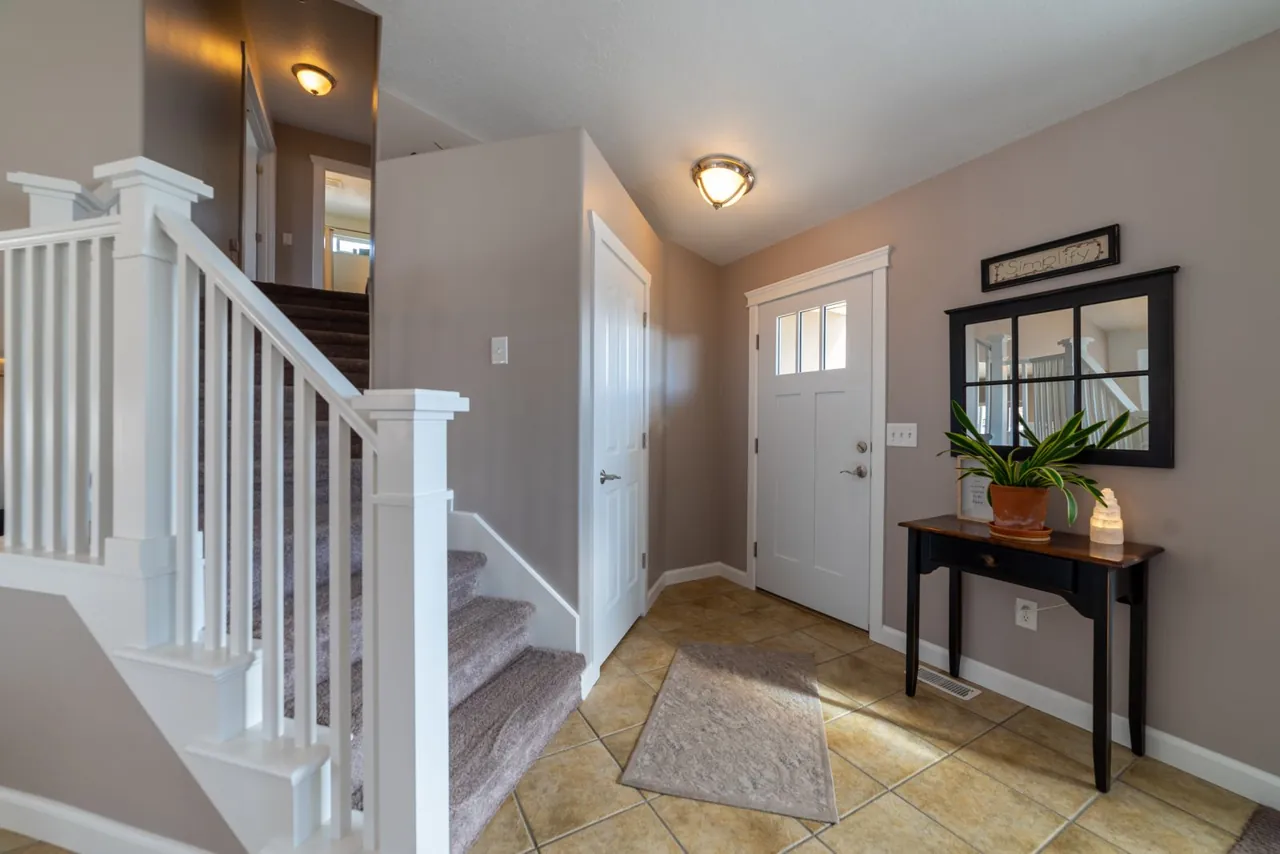
Stairs facing the front door
This is probably the most asked-about problem in Western houses, where the staircase often rises straight up from the front door.
What tradition says: Stairs that run directly down to the door are thought to let energy, and by extension money and opportunities, roll straight down and out of the house. Some teachers are relaxed about it if the stairs are set back several metres; most consider it more of a concern when the bottom step is close to the door.
Practical fixes:
- Slow the line. A runner on the stairs and a round or oval rug at the bottom both break up the straight path visually.
- Add something between the door and the stairs. A plant with soft, rounded leaves, a small console table or a coat stand placed to one side gives the eye somewhere to land before the stairs.
- Light the stairs well. A dark stairwell rising from the door feels heavier. A pendant or wall lights at the top draws the eye up gently.
- Hang something at the top. A picture or mirror on the wall at the top of the stairs (not facing the front door) encourages a sense of movement upward rather than down and out.
Some practitioners hang a faceted crystal from the ceiling between the door and the stairs to “disperse” the energy. That’s optional, and a plant or a rug usually does as much for the feel of the space.
Front door in line with the back door
What tradition says: When you can stand at the front door and see straight through to the back door or a large window, feng shui describes energy entering and leaving immediately without nourishing the home. This is one of the layouts most schools agree on.
The practical side: A straight run from front to back is also a draught tunnel, and it gives visitors an immediate view of the whole house, which some people find unsettling.
Practical fixes:
- Place something in the line of sight to make the path curve: a console table, a large plant, a folding screen, a bench or a bookshelf, depending on how much room you have.
- Use rugs along the route to slow the eye, especially in a long hallway.
- Keep the back door closed when it isn’t in use, and consider a curtain or a frosted panel if it’s glass.
- Hang a picture or put an attractive object partway along the line so there’s something to pause at.
Front door facing a wall
What tradition says: Opening the door onto a wall less than a metre or two away is said to block incoming energy and, metaphorically, opportunities. It’s common in flats, where the front door often opens onto a short corridor.
Practical fixes: Make the wall a destination rather than a barrier. A landscape picture with depth (a path, water or an open view), a good light, and perhaps a small shelf or console with a plant all work. Some consultants suggest a mirror here, but if the wall directly faces the door, many schools would say that sends energy straight back out. A picture with a sense of distance is the safer choice, and it does the same job of “opening” the wall.
Front door facing a bathroom or toilet
What tradition says: A toilet visible from the front door is traditionally linked with energy, and money, draining away as soon as it arrives. It’s one of the more strongly worded rules in classical feng shui.
Practical fixes: Keep the bathroom door closed and the toilet lid down. Make the bathroom door blend in by painting it the same colour as the walls, or draw attention elsewhere with a picture or a plant near the front door. A full-length mirror on the outside of the bathroom door is sometimes suggested as a way to make the door “disappear”; whether you like that idea is a matter of taste and school.
Front door facing another door
In apartment buildings, your front door may face a neighbour’s door across a corridor. Inside a home, the front door may open directly onto a bedroom or kitchen door.
What tradition says: Two doors facing each other across a corridor are sometimes described as “arguing doors”, but most teachers consider it minor if the doors are the same size and aligned. A front door opening straight onto a bedroom is a bigger concern, because the bedroom should be the most protected room in the home.
Practical fixes: For a neighbour’s door, keep your own threshold attractive and well kept. A doormat, a plant if the building allows it, and a clean, working door are enough. Inside, keep the facing door closed, and use a rug or a piece of furniture to create a small pause between the two.
Front door facing a long corridor
What tradition says: A long straight hallway leading away from the door is seen as speeding energy up, like water in a straight channel. The longer and narrower, the stronger the effect is said to be.
Practical fixes: Break the run into sections. Use a runner with a pattern, stagger pictures on alternate walls, add a light or two partway along, and if there’s room, place a narrow table or a plant to one side halfway down. The aim is to give the eye places to stop.
Small, dark or cramped entries
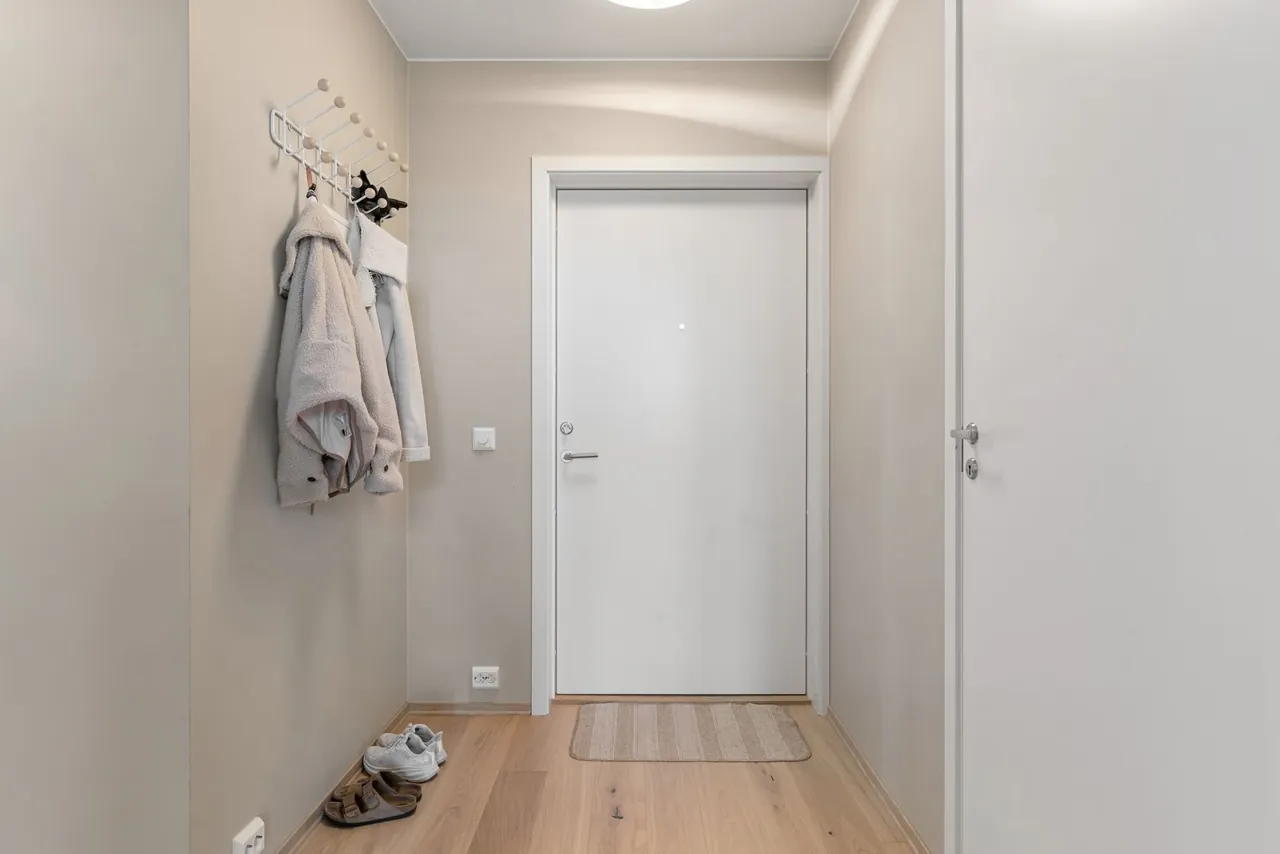
Many homes, especially flats, don’t have a hallway at all; the door opens straight into the living space, or into a tight vestibule with no window.
- Light first. A warm, bright ceiling light or a wall light by the door makes a bigger difference than any object.
- One clear path. Shoes, bags and coats in the walkway are the most common “blockage” a consultant would point to. A closed cabinet or a set of hooks on a side wall keeps the path clear.
- A defined landing zone. In an open-plan flat, a rug and a small table or shelf by the door mark the entry as a distinct space.
- Something living. A healthy plant near the door is a traditional welcome sign. Choose one that suits the light you actually have.
The outside of the door
Problems inside the door get most of the attention, but the approach matters too. Feng shui looks for a clear, gently curving path to the door, a door that’s easy to find, a working light and a threshold that looks cared for. A sticking lock, a squeaking hinge or a dead plant by the step are the kind of small things practitioners routinely point out. They’re also, conveniently, cheap to fix.
Protective symbols are traditionally placed at or near the entry. A pair of guardian lions outside, or an evil eye charm hung inside facing the door, are two common choices. If you’re interested in those, my guide to where to hang an evil eye explains the usual spots and what the tradition intends by them.
Summary table
| Layout | Traditional concern | How strongly schools agree | First fix to try |
|---|---|---|---|
| Stairs facing the door | Energy rolls down and out | Moderate to high | Rug at the foot, plant or table between, good lighting |
| Front door in line with back door | Energy passes straight through | High | Furniture, screen or plant in the line of sight |
| Door facing a close wall | Blocked energy and opportunities | Moderate | Landscape picture with depth, good light |
| Door facing a toilet | Energy drains away | High | Keep bathroom door closed; draw the eye elsewhere |
| Door facing another door | Conflict or exposure | Low to moderate | Keep inner door closed; tidy threshold |
| Long straight corridor | Energy moves too fast | Moderate | Patterned runner, staggered pictures, lights along the way |
| Small, dark entry | Energy can’t enter freely | High | Brighter light, clear floor, hooks on side wall |
What practitioners actually prioritise
When I compared how different feng shui consultants approach entryways for my roundup of front door advice from practitioners, the most consistent theme wasn’t any particular cure. It was the basics: a door that works, a clear path, good light, and nothing piled up in the first few metres. Problem layouts get more attention online, but a tidy, welcoming entry with a slightly awkward layout is in much better shape than a perfectly oriented door hidden behind bikes and recycling.
So if your door faces the stairs or a wall, deal with that once using the fixes above, then turn your attention to keeping the entry clear. If mirrors are part of your plan, my guide to what mirrors should and shouldn’t face explains why a side wall is usually a better spot than the wall opposite the door.
Frequently asked questions
Is it bad feng shui if the stairs face the front door?
Traditionally it’s considered unfavourable because energy is thought to roll down and out. It’s common and fixable: a rug at the foot, a plant or table between the door and the first step, and good lighting all help.
What if my front door and back door line up?
Place something in the line of sight to make the path curve, such as a console table, a screen or a large plant, and keep the back door closed when not in use.
Can I put a mirror on the wall facing my front door?
Most schools advise against a mirror directly facing the front door. Use a side wall instead, or hang a picture with a sense of depth on the facing wall.
My front door opens into the living room. Is that a problem?
It’s very common. Define a small entry zone with a rug, hooks or a cabinet, and keep the path from the door into the room clear.
What is the best thing to place near the front door?
Good light, a clear path and somewhere to put things away. A healthy plant is a traditional welcoming touch if the light allows.
Do these fixes work in a rented flat?
Yes. Rugs, plants, lighting, furniture placement and removable hooks are all renter-friendly and can go with you when you move.