

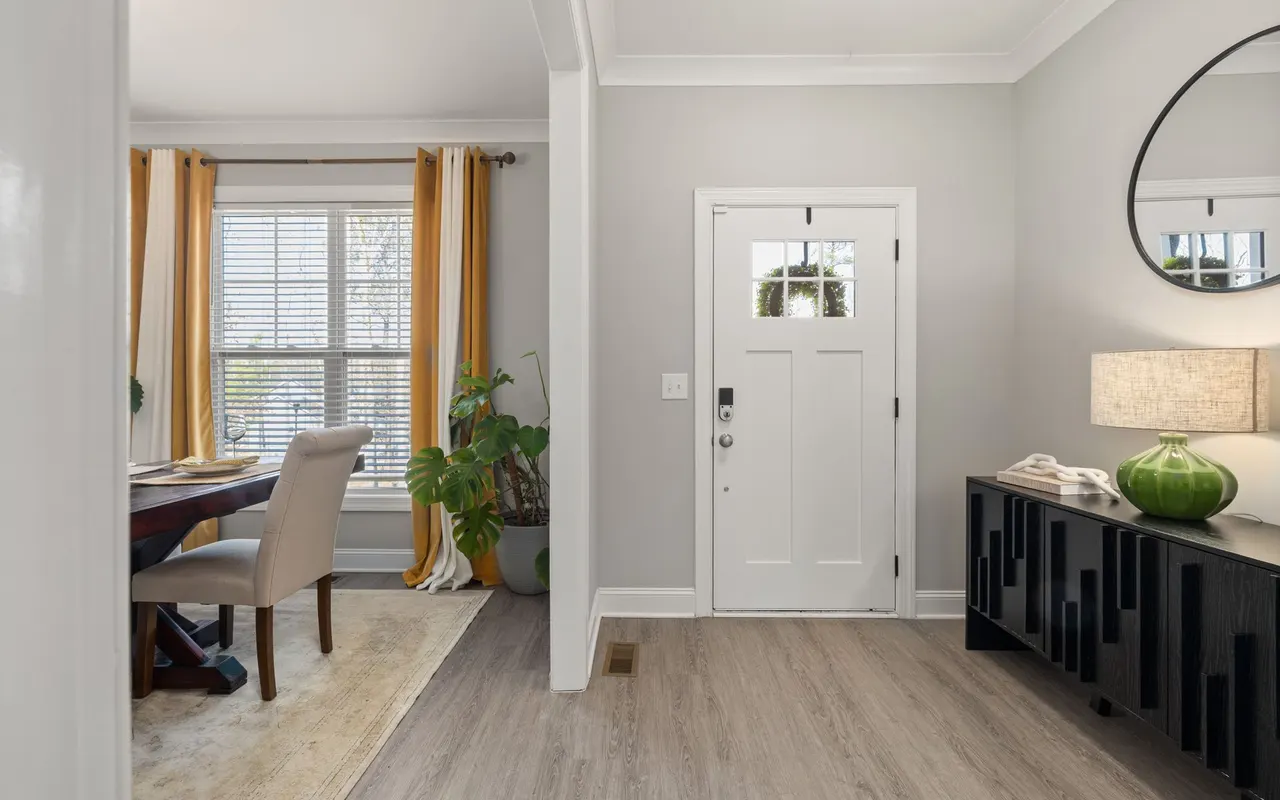
In feng shui the front door is called the mouth of qi, and almost every practitioner says to start there. It's also the easiest part of a home to improve in an afternoon. These eight guides, from consultants and writers I think are worth reading, cover the approach, the door itself and the first few steps inside.
Each entry links to the original article. The summaries and opinions are mine; the advice belongs to the authors, so please read them in full.
How I chose these: each guide is written by a practitioner or a writer working with one, explains its reasoning, and is free to read. I have no business relationship with any of them, and none of them asked to be included.
1. The entrance
By FengShui.info · fengshui.info. An independent feng shui reference site.
A good place to start because it explains why the door matters in both main schools: classical siting reads a house from its facing direction, usually set by the door, while the Western school lays its whole bagua from the door wall. Once you understand that, the rest of the advice makes more sense.
Best for: Readers who want the reasoning before the tips.
Read “The entrance” on fengshui.info
2. Improve the Feng Shui of Your Entrance Hall in 16 Effective Steps
By Dr Michael Oon · michaeloon.com. A London-based traditional feng shui consultant.
The most complete checklist here: storage for coats and shoes, colour, mirrors, mats, daylight and lighting, flooring, cleanliness, plants, security, a place for keys, decoration and stairs. Oon treats the entrance hall as a microcosm of the whole property, which explains why he gives it so much attention. His point about mirrors in the hall matches the traditional advice I set out in my guide to what mirrors should and shouldn’t face.
Best for: A full entrance-hall overhaul.
Read “Improve the Feng Shui of Your Entrance Hall in 16 Effective Steps” on michaeloon.com
3. Entrances & Your Pathway to Harmony
By Suzanne Metzger · Feng Shui Consulting Services. A feng shui consultant and teacher.
Metzger starts at the edge of the lot rather than at the door. A gently curving path is ideal; a straight one can be softened with planters along the way. The door should be easy to find, overgrowth trimmed back and thorny plants moved elsewhere. It's a reminder that the approach counts as much as the door.
Best for: Houses with a front garden or long path.
Read “Entrances & Your Pathway to Harmony” on Feng Shui Consulting Services
4. Feng Shui your front door and entrance
By Julie Britt · juliebritt.com. A feng shui consultant and author.
Britt's guide is unusually architectural: wide steps and porches, a sheltering portico, solid-looking columns, and paths that curve rather than turn at right angles. Some of it means building work, but the checklist for the path (fix broken concrete, edge the grass, keep plants off the walkway) is something anyone can do.
Best for: Homeowners planning exterior changes.
Read “Feng Shui your front door and entrance” on juliebritt.com
5. Q&A Sunday: Feng Shui Your Front Door
By Anjie Cho · Holistic Spaces. A New York architect and feng shui teacher.
A short, friendly Q&A covering the basics: a clear and visible path, a working doorbell, a clear house number, plants or flowers, a door colour you love (red is traditional), and a clean door, frame, hinges and knob. Her point that if guests can find your door easily, so can good energy is a nice way to remember it. In classical feng shui the “right” door colour depends on the direction the door faces, which I cover in my guide to front door direction.
Best for: Beginners who want the essentials.
Read “Q&A Sunday: Feng Shui Your Front Door” on Holistic Spaces
6. What Your Front Door is Telling the Universe: The Feng Shui of Entry Energy
By Alejandra Brady · Casa Shui Life. A feng shui and biophilic interior designer.
Five tips (clear the path, make the door welcoming, light it, add earth and wood elements, create a clear inner entry), a list of what to avoid and a short reset ritual. The biophilic angle, bringing in natural materials and plants, sets it apart from the more traditional guides here.
Best for: Readers who like a more spiritual, design-led approach.
Read “What Your Front Door is Telling the Universe: The Feng Shui of Entry Energy” on Casa Shui Life
7. Feng Shui Entryway Tips from a Clearwater Organizer
By Nathalie Jones · Neat Nathalie. A professional home organiser and feng shui consultant.
The organiser's view: a landing zone with a slim shoe cabinet and key hooks, better lighting on the path, a symbol of welcome, and making the outside match the inside. She describes real client situations, which makes it practical. Some of the results she reports are anecdotal, so read them as encouragement rather than evidence. If your “symbol of welcome” is a protective charm, my guide to hanging an evil eye explains the usual spot inside the door.
Best for: Busy households whose entry is a drop zone.
Read “Feng Shui Entryway Tips from a Clearwater Organizer” on Neat Nathalie
8. I fell in love with the doors in Provence, plus a feng shui checklist for yours
By Dorena Kohrs · Space Doula. A feng shui practitioner writing a newsletter on Substack.
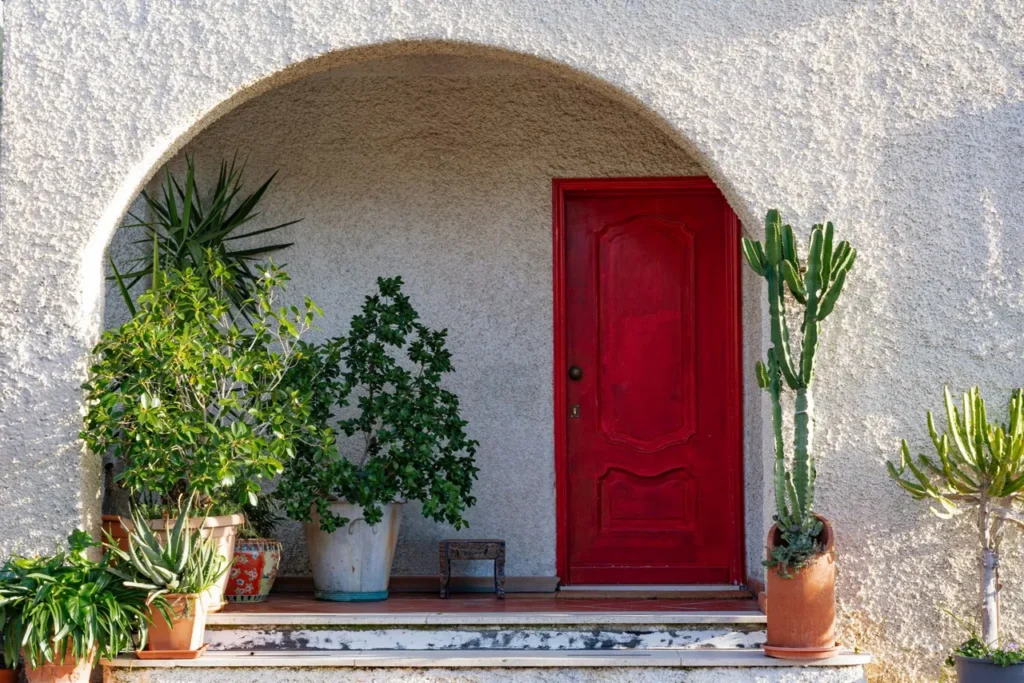
Kohrs uses doors she photographed in Provence to show what different entrances communicate, then gives a checklist: open the door daily, sweep weekly, check the path, light, doorbell and handle, clean the windows, refresh the mat and add a pop of colour. The doorbell and handle checks are small things most of us never think of.
Best for: A quick monthly front-door routine.
Where they agree
- Keep the path clear, visible and well lit.
- The door should open fully and be clean and in good repair, hardware included.
- Give clutter a home: shoes, bags, post and keys.
- Add something living or welcoming: a plant, flowers, a good mat or a colour you like.
Where they differ
The main difference is scale. Britt and Metzger look at the whole approach, including steps, porches and the shape of the path; Cho, Kohrs and Jones focus on what you can change this weekend. Mirrors are the one area where you need care: Oon suggests a mirror can make a hall feel larger, but not directly facing the front door or reflecting a washroom door, which matches the usual advice.
The eight guides at a glance
| Guide | Main focus | Scale of changes | Best starting point if… |
|---|---|---|---|
| FengShui.info | Why the door matters in both schools | Understanding first | You want the reasoning |
| Michael Oon | Sixteen-step entrance hall checklist | Thorough, room-level | You’re overhauling the hall |
| Suzanne Metzger | The approach from the street | Garden and path | You have a front garden or long path |
| Julie Britt | Porches, steps and paths | Architectural, some building work | You’re planning exterior changes |
| Anjie Cho | The essentials, Q&A style | Small, quick | You’re a beginner |
| Alejandra Brady | Welcome, light, elements and a reset ritual | Design-led | You like a spiritual, natural-materials angle |
| Nathalie Jones | Landing zones and storage | Organising | Your entry is a drop zone |
| Dorena Kohrs | A recurring maintenance routine | Small, monthly | You want a habit, not a project |
Putting the advice together
Across all eight, the most consistent message is that condition comes before cures. A door that opens fully, a clean frame and handle, a working light and bell, and a clear floor inside are mentioned again and again, while specific objects are mentioned far less. That’s also the order I’d suggest: fix and clear first, then look at layout, and only then think about symbols.
Layout is where many real homes struggle, and it’s the area these guides cover least. If your door opens onto the stairs, lines up with the back door or faces a wall a step away, my guide to front doors facing stairs, a wall or the back door goes through the traditional fixes for each. Mirrors are the point where Oon adds a caution, and I’ve set out the wider reasoning in my mirrors guide.
Direction and colour come last. Britt and Cho both mention door colour, and Cho notes that red is traditional; in classical feng shui, colour is usually matched to the direction the door faces, which my front door direction guide sets out in a table. If you’d like a protective symbol as a finishing touch, my evil eye guide explains the usual spot inside the door.
If you’re one of the authors featured here and would like a correction or to be removed, please use our contact page.