

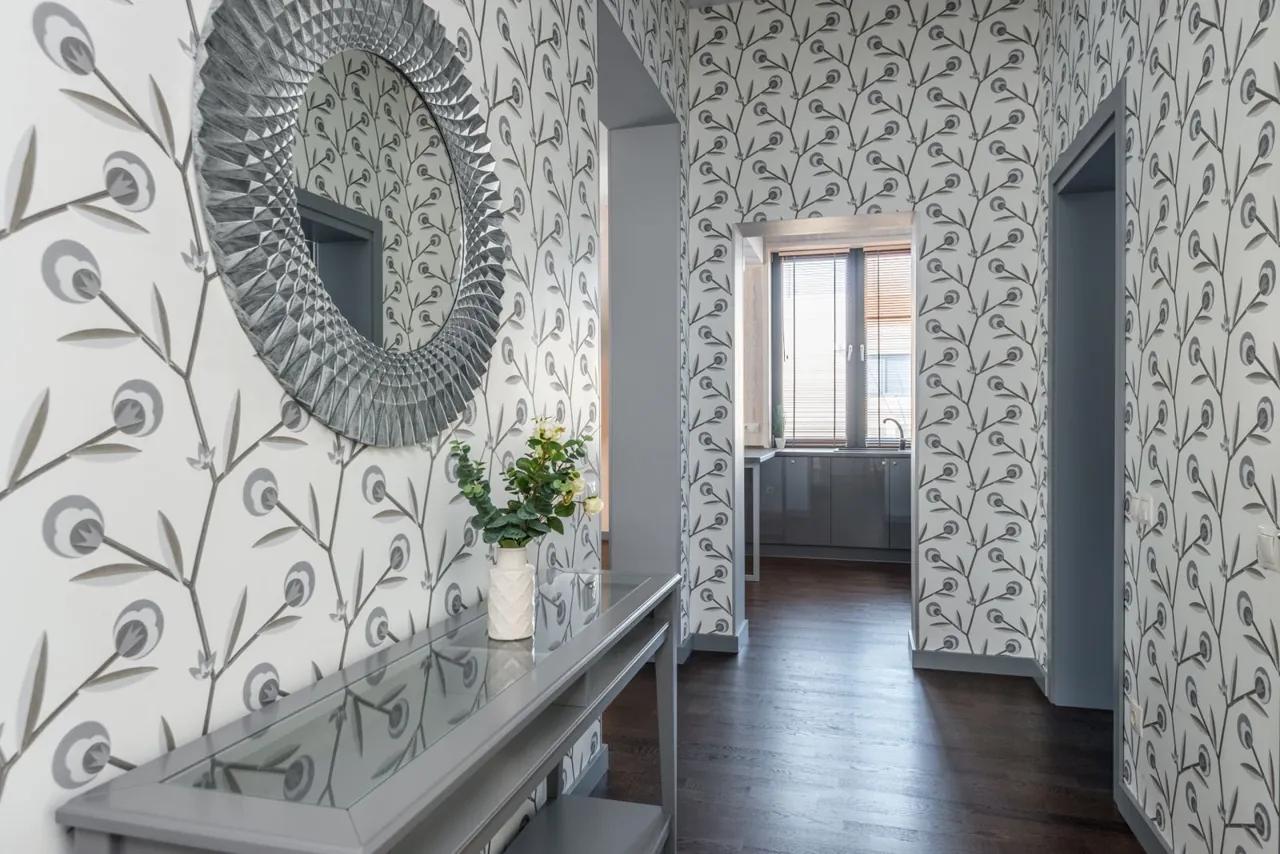
Few feng shui questions come up as often as mirrors, and almost all of them are about what the mirror faces. A mirror opposite the bed, a mirror at the end of the hallway looking straight at the front door, a mirror behind the hob: each one gets a different answer depending on who you ask, and some of the advice online contradicts itself within a single paragraph.
This guide goes placement by placement. For each of the common “facing” situations I’ll explain what traditional feng shui says, where the schools disagree, what the practical side looks like, and what to do if you can’t or don’t want to move the mirror. I’ve kept the symbolism and the everyday reasoning separate so you can decide how much weight to give each.
Key takeaways
- Mirrors are treated as active objects in feng shui: they reflect and multiply whatever they face, so the question is always what’s in front of them.
- A mirror facing the bed is the placement most schools discourage. Move it, angle it away or cover it at night.
- A mirror directly facing the front door is widely discouraged by the Form and BTB schools; a mirror on a side wall of the entry is usually welcomed.
- Mirrors facing the stove or dining table are traditionally positive, as long as they reflect a clean, safe space.
- Avoid cracked, distorted or fragmented mirrors (mirror tiles), and mirrors that cut off the top of your head.
Why mirrors get so much attention
In feng shui, a mirror is one of the classic “cures”: an object used to redirect, expand or deflect energy, known as chi. Because it reflects, it is thought to double whatever it faces. That’s why a mirror reflecting a garden view or a dining table full of food is considered lucky, and a mirror reflecting clutter, a toilet or a sharp corner is considered unhelpful. It’s also why the same mirror can be good in one spot and a problem a metre away.
There’s a practical layer too. Mirrors add light and make rooms feel bigger, but they also create movement and visual noise. A mirror catches your eye every time something moves in front of it, which is pleasant in a hallway and less pleasant at three in the morning. Much of the traditional advice lines up with that experience, which is one reason it has lasted.
A quick note on terms: the small octagonal bagua mirror, framed with the eight trigrams, is a specific protective object usually hung outside the home. It’s not the same as a decorative mirror, and most teachers say it shouldn’t be used indoors. If that’s the mirror you’re asking about, my explainer on what a feng shui mirror is covers it separately.
Mirror facing the bed
What tradition says: Almost every school advises against a mirror that faces the bed or reflects you while you sleep. The reasons given vary: it’s said to disturb rest by keeping energy moving in a room meant for stillness, to “invite a third party” into a couple’s relationship, or simply to startle you when you wake in the dark and catch movement.
The practical side: Mirrors bounce light from windows, streetlamps and screens around the room. If you’re a light sleeper, a large reflective surface opposite the bed can make the room feel brighter and busier than it needs to be.
What to do: Move the mirror to a wall where it doesn’t see the bed. If it’s a mirrored wardrobe door, consider a curtain, a fabric panel or a frosted film, or simply close a fabric cover over it at night. If the mirror is freestanding, angling it a few degrees away from the bed is often enough. I go into bedroom-specific options, including dressing tables and en-suite doors, in my guide to bedroom mirror placement.
Mirror facing the front door
What tradition says: This is where the schools disagree most. The common view, especially in Form School and Western (BTB) feng shui, is that a mirror directly facing the front door pushes incoming energy straight back out before it can circulate through the home. Some practitioners take the opposite view and use a door-facing mirror deliberately to deflect what they see as harsh energy from outside, such as a long straight corridor or a road pointing at the door.
The practical side: A large mirror opposite the door means the first thing you see when you come home is yourself, often in harsh hall lighting. Guests can find it disorienting, and a mirror at the end of a narrow hallway can make the space feel like a tunnel.
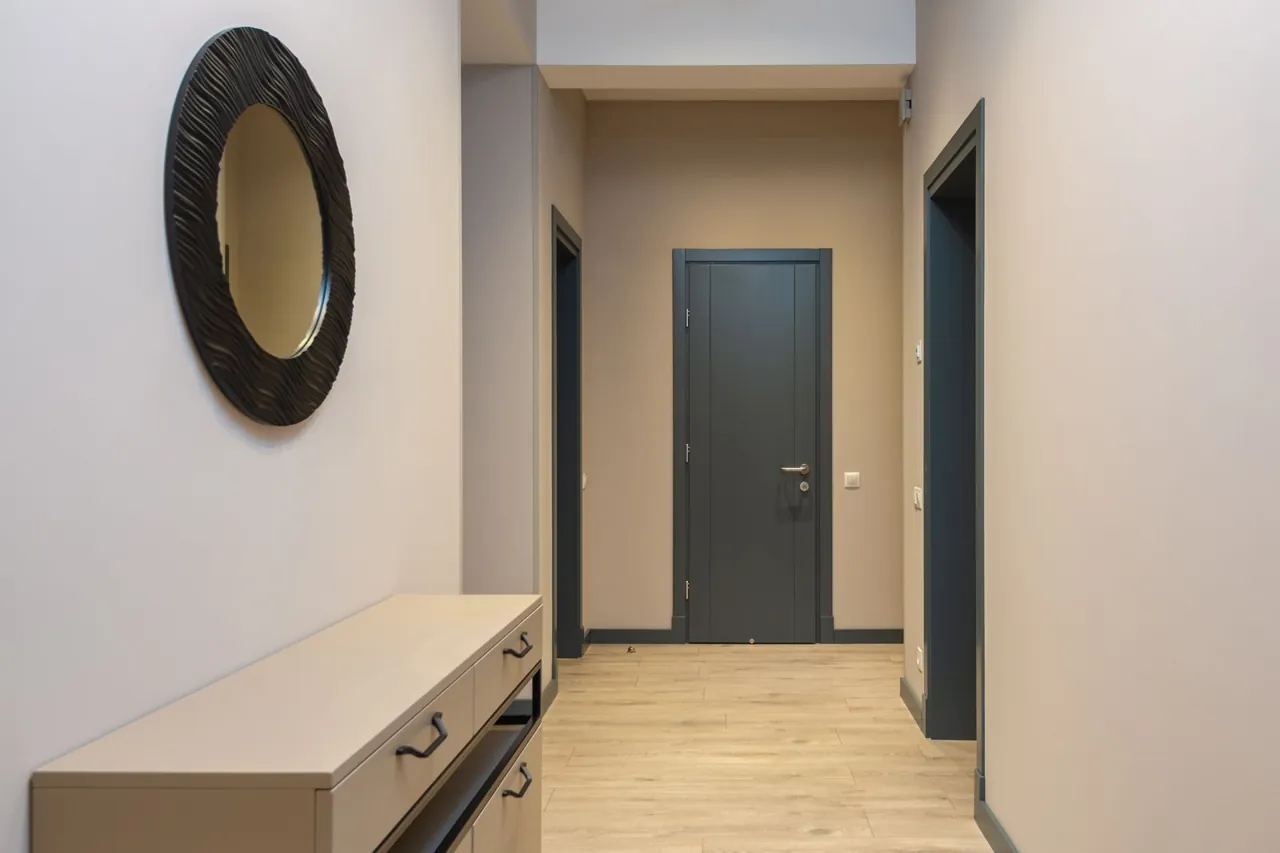
What to do: If you want a mirror in the entry, put it on a side wall, perpendicular to the door. That keeps the benefits (more light, a last look before you leave, a sense of space) without the face-on reflection. If your mirror already faces the door and you’d rather not move it, many consultants suggest placing something between them, such as a console with a plant, so the reflection isn’t a direct line. For more on getting the entry right, my guide to fixing awkward front door layouts looks at hallways, stairs and doors that face each other.
Mirror facing a window
What tradition says: Opinions are mixed. A mirror that reflects a pleasant view (trees, a garden, open sky) is usually considered positive because it brings that view further into the room. A mirror that reflects a view you’d rather not see, such as a car park, a neighbour’s wall or a pointed roof edge, is thought to bring that in too. Some teachers also say a mirror directly facing a window sends incoming energy back out, much like the front door.
What to do: Judge by what the mirror reflects. If the view is good and the reflection fills the room with light, keep it. If it doubles a poor view, angle the mirror so it catches the light from the window without facing it head-on.
Mirror facing the stove or reflecting the cook
What tradition says: In classical feng shui the stove represents nourishment and, by extension, the household’s prosperity. A mirror that reflects the burners is traditionally said to “double” the food and therefore the abundance. A more practical reason is also often given: a cook who stands with their back to the room can see who’s coming in.
The practical side: Mirrors near a hob get greasy fast and need to be heat-safe. A stainless-steel splashback or a polished hood does a similar job of reflecting the burners without the risk of glass near a flame.
What to do: If you like the idea, use a heat-resistant reflective splashback rather than a glass mirror right behind the flame, and keep it clean; a smeared reflection isn’t what the tradition has in mind. If your hob faces a wall and you can’t see the door, a small mirror placed safely to one side solves the “back to the room” problem. My guide to kitchen layout covers stove placement in more detail.
Mirror facing the dining table
What tradition says: This is one of the few placements nearly everyone agrees on. A mirror that reflects the dining table is said to double the food, and with it the family’s abundance. It’s often suggested for the wall beside or opposite the table.
What to do: Hang it so that seated diners see the table and the room rather than themselves at close range. Keep the table clear between meals, or the mirror will “double” the post and the laptop instead.
Mirror facing another mirror
What tradition says: Two mirrors facing each other create an endless corridor of reflections. Most schools discourage it, describing the effect as restless energy that never settles.
What to do: Offset them so they don’t line up, or remove one. This is common in bathrooms with a mirrored cabinet opposite a wall mirror, and in hallways with mirrors at both ends.
Mirror facing the bathroom or toilet
What tradition says: Bathrooms are associated with water draining away. A mirror that reflects the toilet, especially one visible from outside the bathroom, is traditionally avoided because it’s thought to spread that draining effect. A mirror inside the bathroom, above the basin, is perfectly normal.
What to do: Keep the toilet out of the mirror’s line of sight if you can, keep the lid down and the door closed. A mirror on the outside of a bathroom door is sometimes used to “hide” a bathroom that sits in an awkward place, such as opposite the front door; that use is a matter of school and taste.
A quick reference table
| Mirror facing | Traditional view | Agreement between schools | Simple fix if needed |
|---|---|---|---|
| The bed | Avoid | High | Move, angle away or cover at night |
| The front door | Usually avoid | Mixed | Move to a side wall of the entry |
| A window with a good view | Often positive | Mixed | Angle slightly if it feels draughty or busy |
| A window with a poor view | Avoid | Moderate | Angle to catch light, not the view |
| The stove | Positive | Moderate | Use a heat-safe reflective splashback |
| The dining table | Positive | High | Keep the table clear between meals |
| Another mirror | Avoid | High | Offset or remove one |
| The toilet | Avoid | High | Close the door, change the angle |
| Clutter or a sharp corner | Avoid | High | Clear the clutter or move the mirror |
The mirror itself matters too
Placement is only half of it. Tradition also has views on the mirror:
- Whole, not broken. Cracked or chipped mirrors are traditionally replaced rather than kept, because they reflect a broken image.
- One piece, not tiles. Mirror tiles and mosaic mirrors split your reflection into fragments, which most teachers avoid in living areas.
- Tall enough. A mirror that cuts off the top of the head of the tallest person in the household is said to limit them. In practical terms, a full-length mirror in the bedroom or entry is simply more useful.
- Clean. A dusty or smeared mirror reflects a dull room. This is one of those rules that needs no symbolism to make sense.
- Frame shape. Round and oval mirrors are associated with metal energy and softness; square and rectangular ones with earth and stability. It’s a matter of taste which you choose.
Mirrors in small spaces
If you live in a small flat, mirrors are one of the best tools you have, and the facing rules don’t have to stop you using them. Put the largest mirror where it reflects a window or the main living space, not the bed or the front door. In a narrow hall, one mirror on a side wall widens the space. In a small living room, a mirror that reflects the best view in the room, such as a plant, a window or a favourite picture, makes the room feel more generous. For broader advice on arranging a living room around light and flow, see my guide to arranging a feng shui living room.
When you can’t move the mirror
Built-in mirrors, rented flats and mirrored wardrobe doors are common reasons people get stuck. The usual options, roughly in order of effort:
- Change what it faces: move the furniture rather than the mirror, so the bed or table falls out of its line of sight.
- Cover it when it matters: a fabric panel, a roller blind fixed above, or a simple curtain on a tension rod for wardrobe doors.
- Soften it: a plant or a piece of furniture between the mirror and what it faces breaks the direct line.
- Reduce it: removable frosted film turns a full mirror into a smaller one, or into frosted glass, without damaging anything.
None of these require special objects, and all of them can be undone when you move.
Frequently asked questions
Is a mirror facing the bed really bad feng shui?
It’s the mirror placement that most schools agree on avoiding. The reasons are partly symbolic and partly practical: reflections and moving light can disturb rest. If you can’t move it, cover it at night.
Can I hang a mirror opposite the front door?
Most practitioners advise against a mirror directly facing the front door, saying it sends incoming energy back out. A mirror on a side wall of the entry is the widely accepted alternative.
Where is the best place for a mirror in feng shui?
Where it reflects something you want more of: a good view, natural light, the dining table, or a well-kept living space. Many people find a side wall in the entry and a wall beside the dining table work well.
Are mirrored wardrobe doors bad in a bedroom?
Only if they face the bed. If they do, a curtain, fabric cover or frosted film is the easiest fix.
Is it bad luck to have a broken mirror at home?
Feng shui recommends replacing cracked or broken mirrors because they reflect a broken image. It’s also simply safer.
Should a mirror reflect the stove?
Traditionally yes, because it “doubles” the food. Use a heat-safe reflective surface rather than a glass mirror close to the flame.