

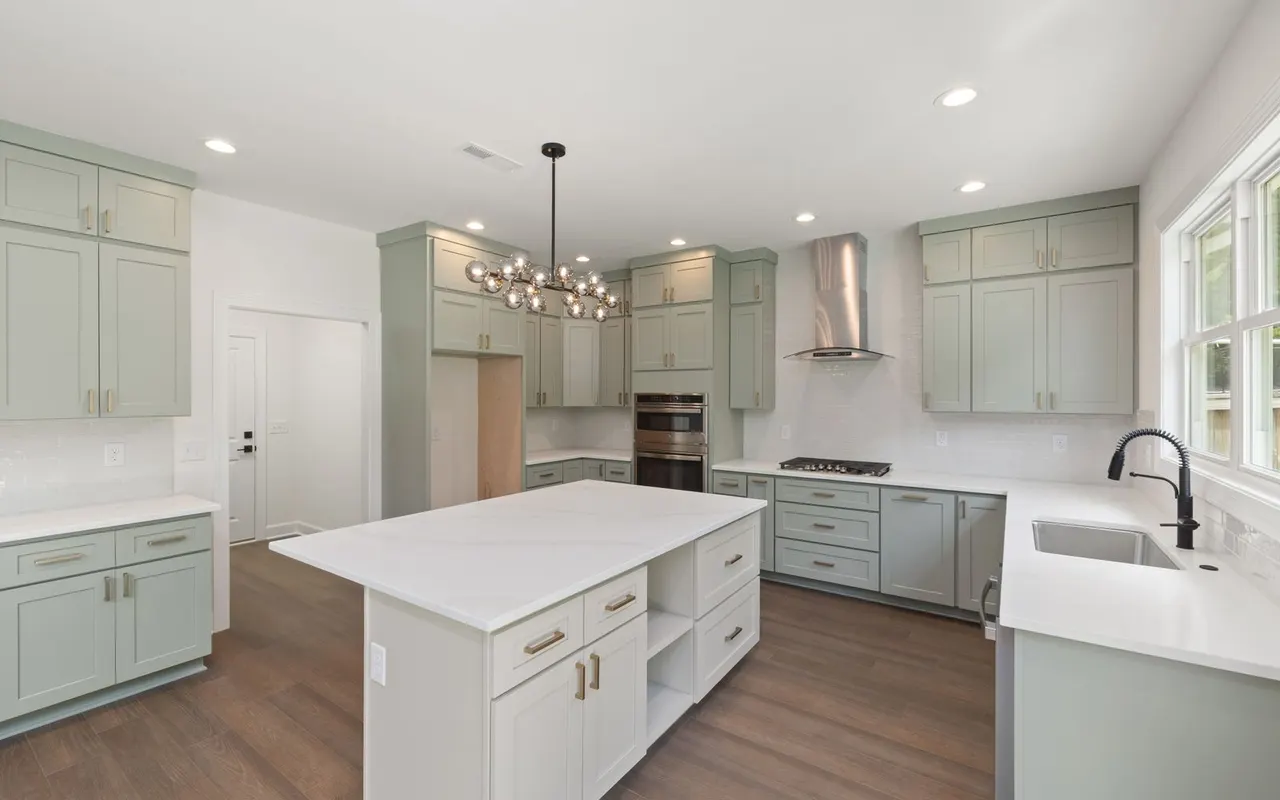
In classical feng shui, the kitchen is one of the three most important rooms in a home, alongside the bedroom and the entrance. It’s where the household’s food is prepared, and the stove in particular is treated as a symbol of nourishment and, by extension, prosperity. That’s why so much traditional advice focuses on where the stove sits, what it faces and how it relates to the sink and the fridge.
This guide covers kitchen layout from a feng shui point of view: the stove and the cook’s position, the fire and water relationship between stove and sink, the kitchen’s location in the home, colours and materials, and the everyday habits that matter. Most kitchens are fixed, so I’ve focused on what you can change without a renovation, with notes for anyone planning a new kitchen.
Key takeaways
- The stove is the heart of the feng shui kitchen. Keep it clean, use all the burners and make sure it works properly.
- The cook should ideally be able to see the kitchen door while cooking. If not, a reflective splashback or small mirror helps.
- The stove (fire) and the sink or fridge (water) shouldn’t sit directly opposite or right next to each other. Wood between them balances the two.
- Kitchens are naturally yang: bright, active and warm. Good light and clear counters support that.
- A kitchen visible from the front door, or in the centre of the home, has its own traditional fixes.
The stove: the kitchen’s power position
The stove is the third of feng shui’s three “power positions”, along with the bed and the desk. The ideal is the command position: the cook can see the kitchen door without standing directly in line with it. The reasoning offered is that a cook who’s startled or uneasy passes that feeling into the food, and in practical terms, it’s safer not to be surprised while handling hot pans.
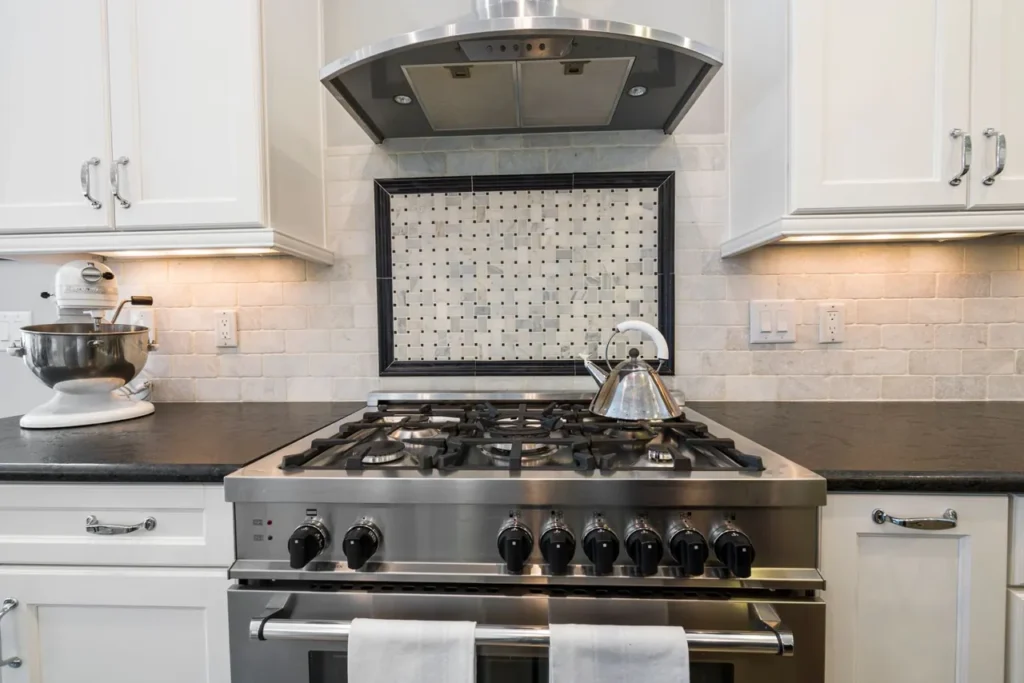
Most hobs sit against a wall, so the cook has their back to the room. If that’s your kitchen:
- A reflective splashback (stainless steel, polished tile or toughened glass) lets you see movement behind you.
- A small mirror to the side of the hob does the same job. Keep glass away from the flame itself.
- In a new kitchen, an island hob facing the room puts the cook in the command position.
Traditional advice also stresses the stove’s condition. Clean the hob regularly, fix any burner that doesn’t work, and rotate which burners you use. A burner that’s never lit is sometimes said to represent unused opportunity. More simply, a clean, working stove makes cooking easier, which is the outcome feng shui wants for the room.
Stove and sink: fire and water
The stove represents fire and the sink, dishwasher and fridge represent water. In the five element cycle, water controls fire, so placing them in direct conflict is traditionally avoided:
- Directly opposite each other across a galley kitchen is the most discussed problem.
- Immediately side by side, with no gap, is a lesser concern.
The traditional fix uses the element that sits between them in the productive cycle. Water feeds wood and wood feeds fire, so wood mediates. A wooden chopping board on the counter between them, a wooden utensil holder, a strip of green tiles, or a pot of herbs all count. If you’re planning a new kitchen, leaving at least a section of counter between stove and sink achieves the same thing. There’s more on how the elements interact in my guide to the five elements.
The work triangle and flow
Feng shui and conventional kitchen design agree on flow. Designers talk about the “work triangle” between sink, stove and fridge: each leg should be a comfortable distance, with nothing blocking the paths between them. Feng shui adds that the path from the door to the cooking area should be clear and not too direct, so the kitchen doesn’t feel like a corridor. Keep the floor clear of bags, bins and clutter, and make sure cupboard doors and the oven door open without hitting anything.
Where the kitchen sits in the home
Kitchen visible from the front door
Traditional feng shui prefers the kitchen not to be the first thing you see when entering. The concern is that household energy and resources go straight to food and consumption. If your kitchen is directly visible, keep the door closed if it has one, or place something in the line of sight, such as a plant, a screen or a console table, so the first view is softened.
Kitchen in the centre of the home
The centre of the bagua is the health and balance area, associated with earth. A kitchen there brings fire into the heart of the home. It’s not considered a disaster, but practitioners suggest balancing with earth: yellow and sand tones, ceramic and stone, and square shapes.
Kitchen in the wealth corner
Fire in the wood-ruled wealth area is said to “burn” its energy. The usual fixes are a clean, working stove and a little added wood. I cover this case in detail in my guide to wealth corners in bathrooms, kitchens and missing spaces.
Colours and materials
Kitchens are naturally yang and fire-heavy, so the aim is usually balance rather than more heat. Common choices:
| Colour or material | Element | Use in the kitchen |
|---|---|---|
| White, cream, soft grey | Metal | Walls, cabinets: clean and calm |
| Yellow, sand, terracotta | Earth | Walls, tiles, ceramics: warm and grounding |
| Green, natural wood | Wood | Cabinets, accents, herbs: fresh and mediating |
| Stone, ceramic | Earth | Counters, floors, storage jars |
| Bright red | Fire | Small accents only; adds more heat |
| Black, dark blue | Water | Accents; large areas can clash with fire |
These are traditional associations, not rules. A kitchen you enjoy cooking in matters more than any colour.
Light and air
A kitchen should be bright. Good overhead light, task lighting under the wall cabinets and as much daylight as possible support the room’s active, yang character. Ventilation matters too: cooking smells and steam that linger are a sign of stagnant energy in feng shui terms and of poor air in ordinary terms. Use the extractor, open a window when you can, and keep the hood filter clean.
Counters, cupboards and the fridge
- Clear counters. Keep out only what you use daily. Appliances you use weekly can live in a cupboard.
- Cupboards and pantry. Clear expired food and broken utensils regularly. Feng shui associates a well-stocked, orderly pantry with abundance.
- The fridge. Clean it out weekly and keep the outside uncluttered; a fridge door covered in papers and magnets is a small source of visual noise.
- Knives. Store them in a drawer or block rather than on a magnetic strip pointing into the room, which some practitioners see as a “poison arrow”.
- Bins. Keep them closed and out of the cooking zone, and empty them often.
Plants, fruit and finishing touches
Herbs on a sunny windowsill are a classic feng shui kitchen addition: they add wood energy, sit naturally between fire and water and are useful. A bowl of fresh fruit on the counter or table is associated with abundance. My guide to the best feng shui plants by room includes kitchen-friendly options that cope with heat and humidity.
Mirrors are also traditionally used in kitchens to reflect the stove, which is said to “double” the food. If you like the idea, use a heat-safe reflective surface. My guide to mirrors facing the bed, door or stove explains the reasoning and the safety points.
Planning a new kitchen
If you’re renovating, a few feng shui preferences are easy to build in from the start:
- Position the hob so the cook can see the door, for example on an island or a peninsula.
- Separate the hob from the sink with counter space, and avoid placing them directly opposite.
- Avoid placing the hob directly under a window, which is said to let the household’s energy escape (and makes the window hard to clean).
- Avoid the hob being directly in line with the kitchen door.
- Plan for good daylight, task lighting and strong ventilation.
- Choose plenty of closed storage so counters stay clear.
Frequently asked questions
Where should the stove be in feng shui?
Ideally where the cook can see the kitchen door without being directly in line with it, not under a window and not directly opposite the sink.
Is it bad if the stove faces the sink?
It’s traditionally considered a fire and water clash. Adding wood between them, such as a chopping board, green tiles or herbs, is the usual remedy.
What colour should a feng shui kitchen be?
Whites, soft greys, warm yellows, earth tones and greens are common choices. Bright red is usually kept to accents.
Is a kitchen near the front door bad feng shui?
Traditionally it’s preferred not to see the kitchen first. Close the door or soften the view with a plant or screen.
Can I use a mirror behind the stove?
Traditionally yes, to see behind you and “double” the food. Use a heat-safe reflective splashback rather than glass close to the flame.
Should all burners be used?
Many practitioners suggest rotating them. At a minimum, make sure all of them work.