

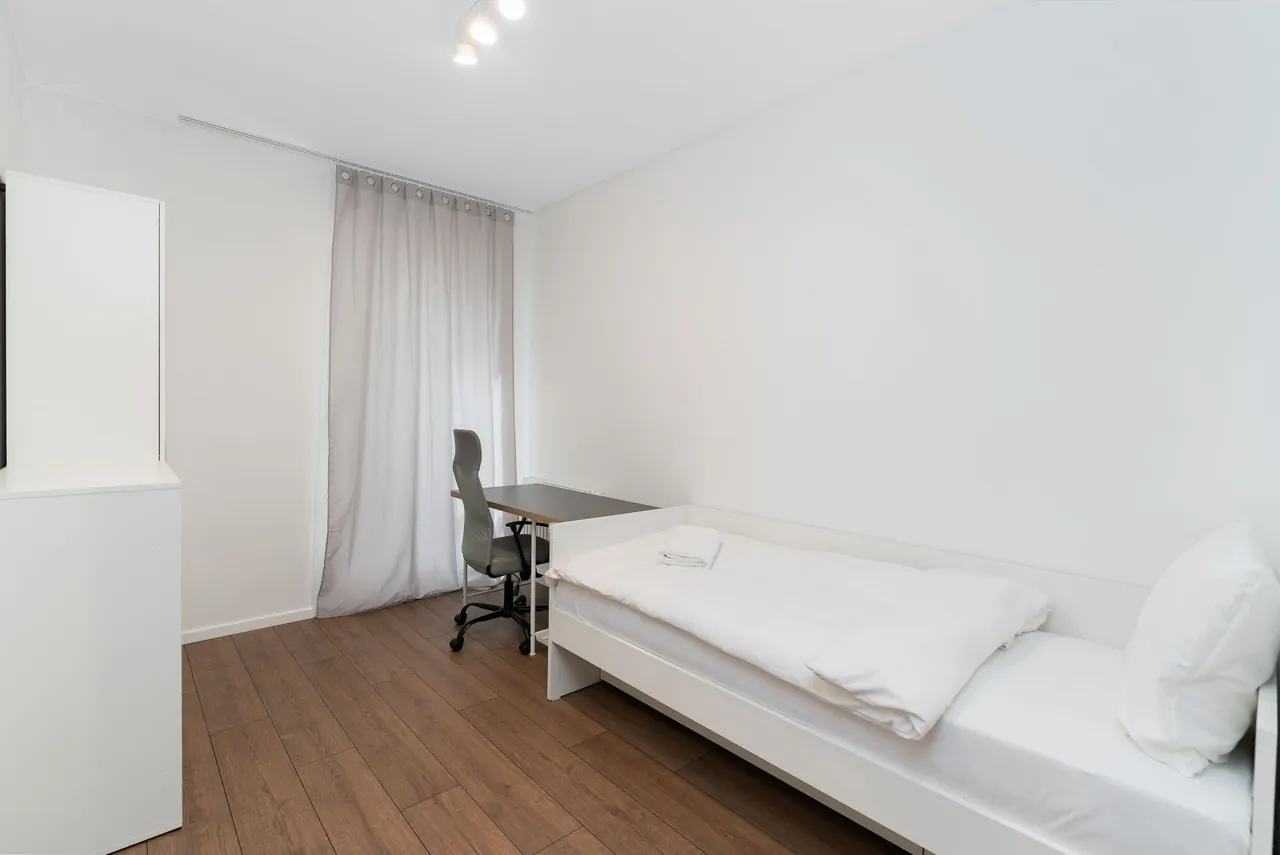
Most bedroom feng shui advice assumes you have choices: a wall for the headboard, a clear view of the door, space on both sides of the bed. In a small bedroom you often have one workable wall, a window you can’t avoid and a door that opens straight onto the mattress. The textbook layout simply doesn’t fit.
This guide is for that room. It covers how to rank the traditional rules when you can’t follow all of them, five common small-room layouts and what to do with each, and the furniture and storage choices that make the biggest difference when every square metre counts. None of it requires buying special objects. Most of it comes down to where the bed goes and what surrounds it.
Key takeaways
- When you can’t follow every rule, prioritise in this order: a solid wall behind your head, not lying in line with the door, a view of the door, and then everything else.
- Pushing one side of the bed against a wall is a reasonable compromise in a small room, even though the ideal is space on both sides.
- A solid, padded headboard does a lot of work when the bed has to sit under a window or against a busy wall.
- Under-bed storage is fine if it’s closed, tidy and holds soft things like linen, not paperwork or old boxes.
- Light colours, one mirror at most (not facing the bed) and fewer, larger pieces of furniture keep a small room calm.
Why small bedrooms break the usual rules
Traditional feng shui puts a lot of weight on the bed because you spend a third of your life in it and you’re at your most unguarded while you sleep. The classic advice is to place it in the command position: diagonally across from the door, with a solid wall behind the headboard and a clear view of whoever walks in. The idea is that you rest more easily when nothing can surprise you from behind. If you want the full background, I’ve explained the reasoning in my guide to where the head of your bed should go.
In a room of nine or ten square metres, the command position may land on a radiator, a built-in wardrobe or the window. Many small bedrooms also have the door, the window and the only long wall arranged so that every option breaks at least one rule. That’s normal, and it isn’t a reason to give up on the room. Feng shui practitioners deal with awkward layouts all the time; the skill is in knowing which rules matter most and how to soften the ones you can’t follow.
Rank the rules before you move anything
When I work through a small room on paper, I use a simple order of priorities. It isn’t an official hierarchy from any one school, but it reflects where most teachers place their emphasis, and it stops you from rearranging the room around a minor point.
| Priority | Rule | Why it matters | If you can’t follow it |
|---|---|---|---|
| 1 | Solid wall behind your head | Gives a sense of support and stops draughts and noise from behind | Use a tall, solid headboard and heavy curtains if the wall has a window |
| 2 | Feet not pointing straight out of the door | Lying in line with the door is traditionally avoided and often feels exposed | Shift the bed even 30 cm off the line, or add a bench or chest at the foot |
| 3 | A view of the door from the bed | You can see who comes in without turning | A small mirror placed so you can see the door, but not facing the bed |
| 4 | Not under a beam, shelf or sloping ceiling | Heavy things overhead are thought to press down on sleep | Remove shelves above the bed; soften a beam with fabric or paint it the ceiling colour |
| 5 | Space on both sides | Balance and equal access, especially for couples | One side against the wall is an acceptable compromise in a single or small double |
| 6 | Compass direction | Optional; used in the Eight Mansions method | Skip it, or choose the best of the directions your layout allows |
Notice that compass direction comes last. Some readers start with direction because it sounds the most “feng shui”, but if your best direction puts your head under a window and your feet at the door, you’ve traded two important rules for one optional one. If you do want to use direction, my article on which direction your bed should face explains the Kua-based approach and when it’s worth bothering with.
Five small-bedroom layouts and what to do with each
Most small bedrooms fall into one of a handful of shapes. Find the one closest to yours, then adjust.
1. The door opens straight onto the foot of the bed
This is the most common problem in box rooms. Often the only long wall runs opposite the door, so the bed ends up pointing straight out of the room. Tradition calls this the “coffin position” because of the old custom of carrying the dead out feet first, and even people who don’t care about the symbolism often find it unsettling to have the door right at their feet.
First, check whether the bed can move along the wall so your feet are no longer in line with the doorway. Even a partial shift helps. If it can’t, put something solid between the foot of the bed and the door: a low bench, a blanket chest or a footboard. Keep the door closed at night, and make sure it doesn’t hit the bed when it opens. A door that bangs against furniture is a small, daily irritation that feng shui would count as blocked flow.
2. The only wall for the headboard has a window in it
Sleeping with your head under a window is traditionally discouraged because there’s no solid support behind you, and in practical terms windows bring draughts, light and street noise. In a small room it’s sometimes unavoidable.
A solid headboard that rises above the mattress makes the biggest difference. Choose one that’s upholstered or solid wood rather than slatted or metal with gaps. My guide to headboards to avoid covers the shapes and materials that work against you. Add lined curtains or a blackout blind that you close at night, and leave a small gap between the headboard and the window frame so the window can still open for fresh air during the day.
Many flats put the bathroom right behind the bedroom wall. Classical feng shui prefers that the head of the bed doesn’t share a wall with a toilet, shower or stove, partly for symbolic reasons (water draining away) and partly because of noise from pipes and extractor fans.
If another wall works, use it. If not, keep the bathroom door closed, keep the toilet lid down, and choose a padded headboard that dampens sound. Some people place a bookcase or a set of shelves behind the headboard as a buffer, but in a small room that eats space; a solid headboard usually does the job.
4. The room is long and narrow
Narrow rooms tend to push the bed across the width with almost no walking space around it, or along the length with the door at one end. Along the length is usually better: put the headboard on the short wall farthest from the door if that wall is solid, and keep one long side clear as a walkway.
Break up the corridor feeling with a rug placed across the room, a light on the wall rather than a floor lamp, and storage built up rather than out. Avoid lining every wall with furniture; a narrow room feels calmer with one clear run of floor.
5. The ceiling slopes over the bed
Attic rooms often leave the bed under a sloping ceiling. Feng shui treats heavy or slanted surfaces over the sleeper as oppressive, and there’s a practical side: people bang their heads getting out of bed.
Place the headboard on the tallest wall if you can. If the slope has to be over the bed, put the head at the higher end, paint the slope the same light colour as the walls so it recedes, and avoid hanging anything on the sloped surface above you.
Bed size, frame and what goes underneath
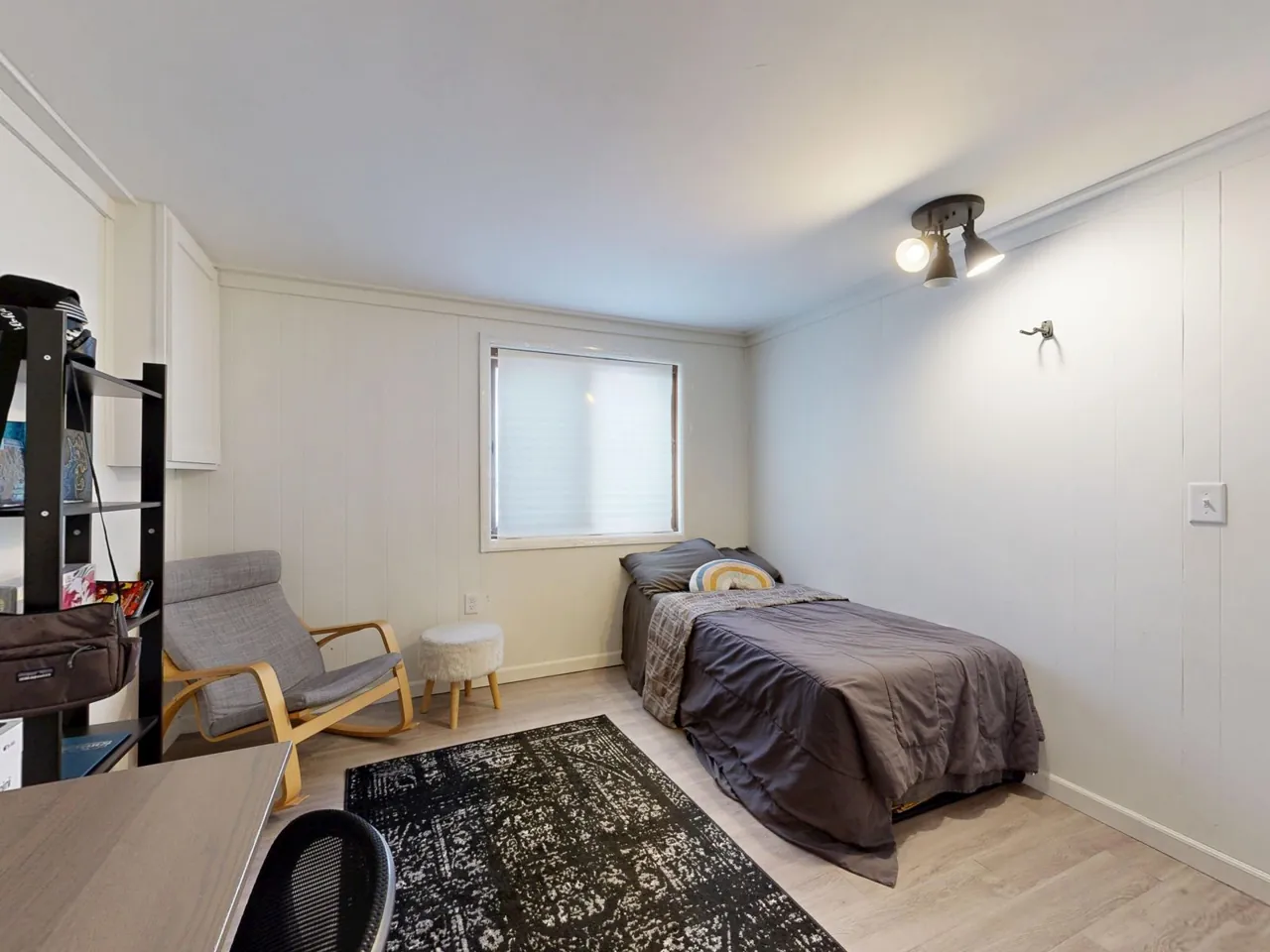
The bed itself is the biggest decision in a small room. A larger bed can feel like a treat, but if it leaves you squeezing past furniture every morning, the room will never feel restful. Measure the walkway you’ll actually have: about 60 cm along at least one side and at the foot is a comfortable minimum for most people.
Raised frames on legs let air move underneath and make the floor look larger, which suits small rooms. If you need storage, drawers or a lift-up base are fine in feng shui terms as long as what’s inside is calm and orderly. Spare bedding, out-of-season clothes and towels are good candidates. Avoid storing paperwork, tools, old letters or anything you feel guilty about; the idea of sleeping on top of unresolved clutter is exactly what tradition warns against, and it’s also a practical reason the room never feels finished.
Whatever frame you choose, make it stable. A bed that creaks or wobbles works against the sense of support that the whole command position idea is built on.
Mirrors, colour and light in a small room
Mirrors are often recommended to make small rooms look bigger, and they do. The feng shui caution is about where they point. A mirror that reflects you while you sleep, or that faces the bed directly, is the placement most schools discourage, because it’s thought to bounce energy around a room that should be quiet. My guide to mirror placement in the bedroom goes through the safe spots, but for a small room the short version is: one mirror, on a side wall or inside a wardrobe door, not opposite the bed.
Colour does a lot of the work that extra space would otherwise do. Soft, light tones such as pale greens, warm whites, soft greys and muted blues make a room feel larger and calmer. Strong reds and bright oranges are traditionally associated with fire energy and are usually kept to small accents in a bedroom. For specific shade ideas and how to match them to the room’s direction, see my article on calming bedroom colours.
For light, use two or three softer sources rather than one bright ceiling light. Wall-mounted reading lamps free up the bedside tables, which in a small room are often no bigger than a stool.
Furniture: fewer, larger, lower
Small rooms get cluttered quickly when they hold lots of small pieces. A single wardrobe that reaches close to the ceiling is calmer than a chest of drawers, a clothes rail and a set of baskets. Keep the tallest furniture away from the bed if you can, so you’re not sleeping beside a looming shape.
| Instead of | Try | Why |
|---|---|---|
| Two mismatched bedside tables | Matching wall shelves or small floating tables | Balance on both sides, and the floor stays clear |
| Floor lamp in the corner | Wall lights beside the headboard | Frees floor space and puts light where you read |
| Open shelving above the bed | A picture or nothing at all | Nothing heavy hangs over your head |
| Desk wedged at the foot of the bed | A fold-down desk on another wall, or work elsewhere | Keeps work out of your line of sight at night |
| Exercise equipment in the corner | Store it in a cupboard or another room | Active, “yang” objects compete with rest |
If the bedroom has to double as an office, angle the desk so you don’t see it from the bed, and cover or close the laptop at night. A folding screen or a curtain on a ceiling track is a neat way to hide a work corner without building anything.
A 20-minute check for any small bedroom
Once the bed is in place, run through the rest of the room. These are the quick checks I’d suggest before you buy anything:
- Lie on the bed. Can you see the door without twisting? If not, could a small mirror on a side wall show it to you?
- Is anything hanging, stored or shelved directly above your head? Move it.
- Does the door open fully without hitting furniture? Clear the arc.
- Are both sides of the bed balanced, even if one is against the wall? Matching lamps or shelves help.
- What do you see first when you wake up? If it’s laundry, a desk or a pile of boxes, change it.
- Is there anything under the bed you’d rather not think about? Move it out.
- Do curtains or blinds block early light and street lamps? Sleep comes first.
- Are there electronics charging next to your head? Move the phone across the room if you can.
If you’d like a printable version to tick off, the free bedroom feng shui checklist covers these points and a few more, grouped by area.
What not to worry about
Small bedrooms attract a lot of anxious questions, and some of them don’t deserve the worry. You don’t need to buy crystals, bagua mirrors or special figurines to make a small room work. You don’t need to repaint because your bed faces a direction someone online called unlucky. And if your only option breaks a rule, that’s fine: feng shui is about making the best of the space you have, not about passing a test.
Focus on support behind you, a calm view in front of you and a room you can move around easily. Those three things are what the tradition is really after, and they happen to be what makes a small room pleasant to sleep in.
Frequently asked questions
Is it bad feng shui to push the bed against the wall?
The ideal is space on both sides, especially for couples, so each person has equal access. In a small room, pushing one long side against the wall is a widely accepted compromise. Keep the headboard against a solid wall, and if two people share the bed, try to make sure neither is “trapped” without a way out.
Can I put my bed under the window if there’s no other option?
Yes. Use a solid, tall headboard, close heavy curtains or a blind at night, and keep the window area tidy. These steps give the support and quiet that a wall would normally provide.
What if my bed faces the bedroom door?
Facing the door from across the room is fine and is part of the command position. The problem is lying directly in line with the doorway with your feet pointing out. Shift the bed off that line if you can, or put a bench or chest at the foot.
Is under-bed storage bad feng shui?
Not if it’s closed and calm. Linen, towels and seasonal clothing are fine. Avoid paperwork, broken items and anything with strong emotional weight.
Should I use a mirror to make my small bedroom look bigger?
One mirror is fine if it doesn’t face the bed. A side wall or the inside of a wardrobe door works well. Avoid mirrored wardrobe doors that face the bed directly, or cover them at night.
Does the direction my bed faces matter in a small room?
It matters least of all the rules here. If your layout allows a choice, you can use your Kua number to pick a favourable direction, but don’t sacrifice a solid wall or a clear doorway to get it.