

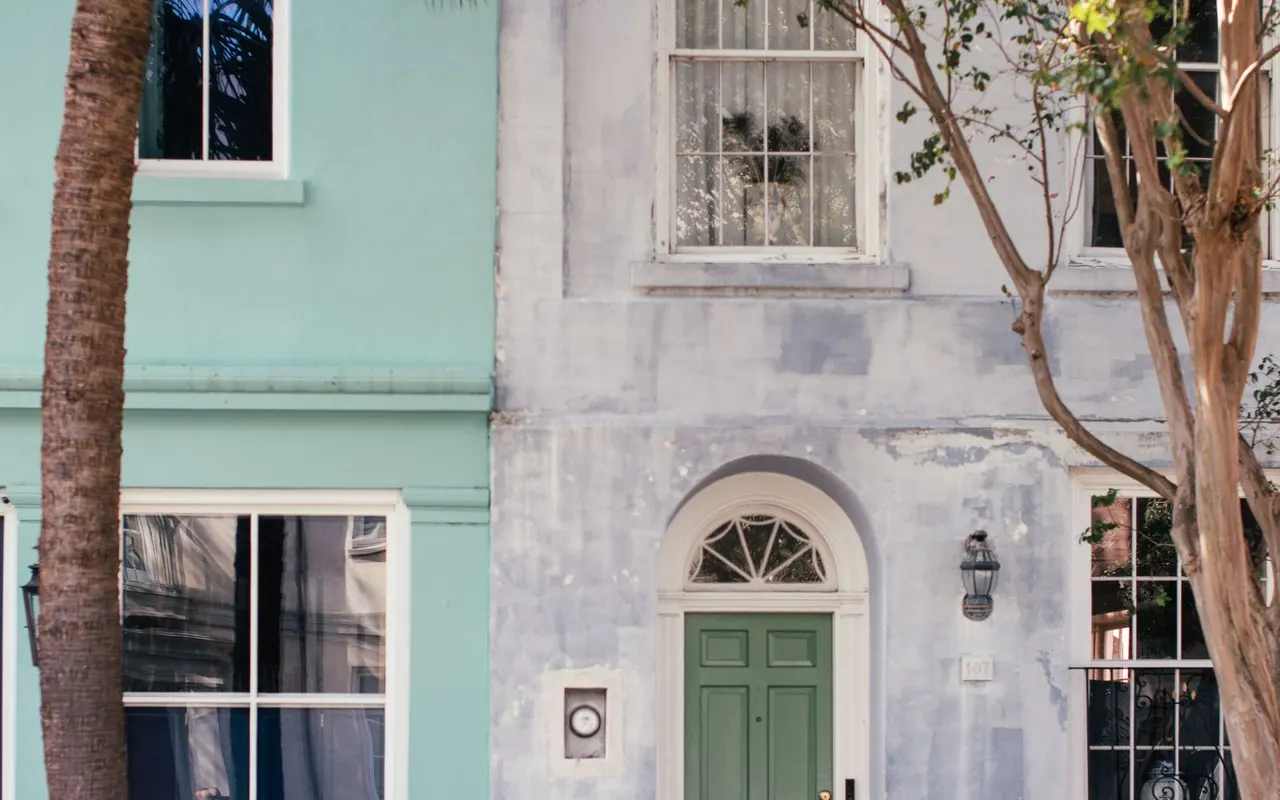
In feng shui the front door is called the “mouth of qi”: the point where energy, people and opportunities enter the home. It’s also the first thing you see when you come home and the first impression a guest gets. That’s why the entrance is the place most practitioners look at first, and why small changes there are worth more than their size suggests.
Here’s how to make an entryway welcoming in feng shui terms, from the path outside to the first few metres inside the door.
Key takeaways
- The front door should open fully, without anything behind it, and the path to it should be clear and well lit.
- Inside, keep the first few metres open, bright and uncluttered, with a clear place for shoes, coats and post.
- A healthy plant, good lighting and a clean mat are the classic welcoming touches.
- Be careful with mirrors directly facing the door; most practitioners prefer them on a side wall.
- Repair anything that sticks, squeaks or is broken. A door that works smoothly is the foundation of entrance feng shui.
Why the entrance matters in feng shui
Feng shui reads a home from the outside in. Qi is said to arrive along the path or street and enter through the main door, so the condition of the entrance shapes the energy that reaches every other room. A cramped, dark or cluttered entry is thought to slow that flow; a clear, bright one lets it in gently.
It’s also the room you pass through most often. An entry that’s easy to come home to, where you can drop your keys and hang your coat without a struggle, makes a difference every single day.
Outside: the path and the door
- The path: keep it clear of bins, bikes and overgrown plants. A gently curving path is considered ideal; a dead-straight one is fine, especially if it’s softened with planting along the edges.
- Light: a working light by the door makes the entrance welcoming after dark and safer to use.
- The door itself: clean it, oil the hinges, and fix a lock that sticks. Peeling paint and a broken bell are small things that feng shui treats as neglected energy.
- House number: make it easy to see. Being easy to find is part of being welcoming.
- Plants: a pair of healthy potted plants either side of the door is a classic, balanced welcome.
The direction the door faces matters in compass-based feng shui, and my guide to front door directions covers how to measure it and which colours are traditionally linked to each direction.
Inside: the first few metres
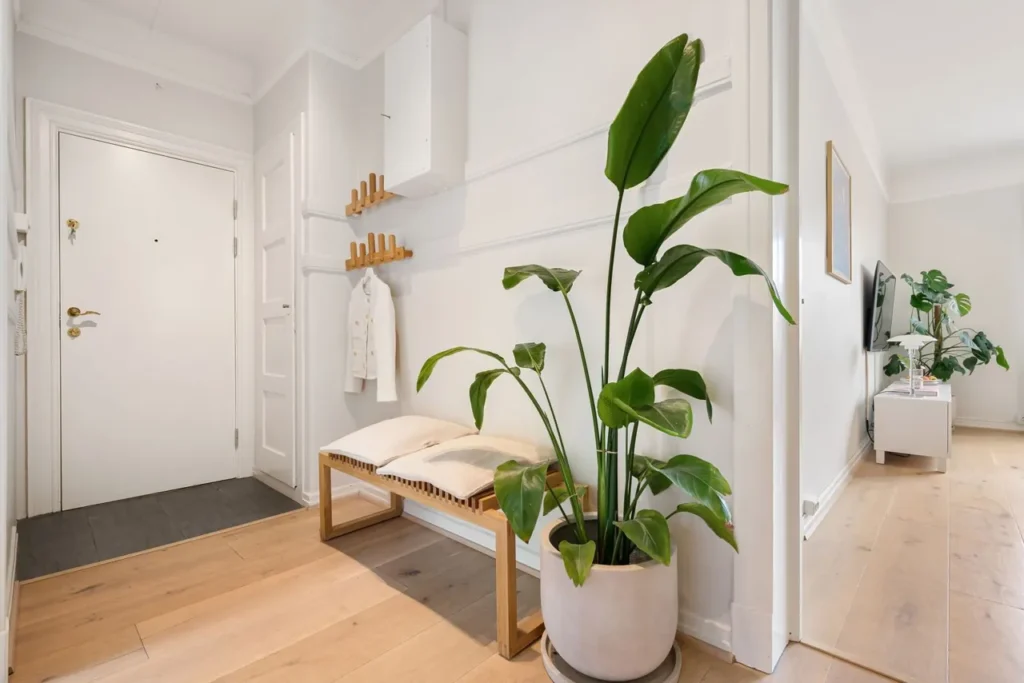
The area just inside the door is sometimes called the ming tang or “bright hall”. Feng shui likes it to be open and bright, so energy can gather before it moves into the rest of the home.
- Make sure the door can open fully, without coats, shoes or furniture behind it.
- Keep the floor clear for at least a step or two inside.
- Use good overhead or wall lighting, and add a lamp if the hall has no window.
- Give everything a home: a shoe rack or cupboard, hooks for the coats in daily use, and a tray or bowl for keys and post.
If your entrance is the main clutter trap in the house, my guide to why clutter clearing comes first has a simple way to tackle it in short sessions.
Welcoming touches
| Touch | Feng shui reasoning | Practical tip |
|---|---|---|
| A healthy plant | Living wood energy and growth | Choose one that copes with the hall’s light; replace it if it struggles |
| Good lighting | Fire energy; brightens and lifts a dim space | Warm white bulbs feel more welcoming than cold ones |
| A clean doormat | Marks the threshold and keeps dirt out | Replace it when it’s worn |
| Artwork you love | Sets the tone for the home | Choose something uplifting rather than dark or aggressive |
| A bench or seat | Makes the space usable and calm | Only if there’s room; don’t let it narrow the path |
Colour at the entrance
Colour is an easy way to change how an entrance feels. Light, warm neutrals and soft colours make a narrow hall feel bigger and more welcoming; a single stronger accent, such as a painted door, a runner or a piece of art, gives it character. In compass feng shui the front door colour is sometimes chosen by the direction the door faces, using the five elements: red for a south-facing door, for example, or green for an east-facing one. If you’d rather not follow directions, choose a door colour you’re happy to come home to and keep it in good condition. A freshly painted, well-kept door says more than any particular shade.
Mirrors in the entryway
Mirrors are useful in a dark or narrow hall, but placement matters. Many practitioners advise against a mirror directly facing the front door, on the idea that it bounces incoming energy straight back out. A mirror on a side wall is generally considered fine and still brightens the space. Schools differ on the details, and I go through the arguments in my guide to mirrors facing the bed, door or stove.
Awkward entrance layouts
Many homes have entrances that break the textbook rules: a staircase that rises right in front of the door, a wall a step inside, or a back door in a straight line with the front. These have their own traditional fixes, usually involving plants, rugs, lighting or a screen to slow the path of energy, and I cover them in detail in my guide to front doors facing stairs, a wall or a back door.
If you live in a flat, your “entrance” starts at your own front door, not the building’s lobby. You can’t control the shared corridor, but you can keep your own doorway clean and well lit, put down a good mat, and make the first metre inside your door as open and bright as possible. In a studio where the door opens straight into the living space, a rug, a console or a change of lighting can mark out a small entry zone.
Frequently asked questions
What should you put at the entrance for good feng shui?
A clean mat, good lighting, a healthy plant and somewhere tidy for shoes, coats and keys. Keep the door able to open fully.
Is a mirror facing the front door bad feng shui?
Many practitioners advise against it and prefer a mirror on a side wall. Some schools are more relaxed about it, so it’s a point of disagreement rather than a firm rule.
What if my hallway is very small?
Focus on keeping the floor clear and the light good. Wall hooks and a slim shoe cabinet use less space than freestanding furniture.
Where should shoes go?
In a closed cabinet or neat rack near the door, not scattered across the entrance.